
Get Support
+86 18055890315
Compact Material Lifts for Light-Duty Positioning
-
 By: ZG-Helplift
- Nov 21, 2026
- 1 Visit
A practical look at the problem, the design choices and the places a compact lift can help.
At Fuyang Zhugao Mechanical Equipment Co., Ltd., product development starts with a problem we hear in buyer enquiries and operator feedback: a lift must fit the available work area and still position a defined load at the required height. That sounds simple until the design work begins. Reducing size, selecting materials, setting a realistic load rating and making controls easy to use can pull a design in different directions. In China's intensely price driven domestic market, the lowest quote often gets attention before buyers can compare material specifications, components and inspection. Price alone does not show whether two machines are built to the same standard. We cannot change that market pressure on our own. We can review our material and component choices carefully, check the finished machine, and state clearly what each model is built to do.
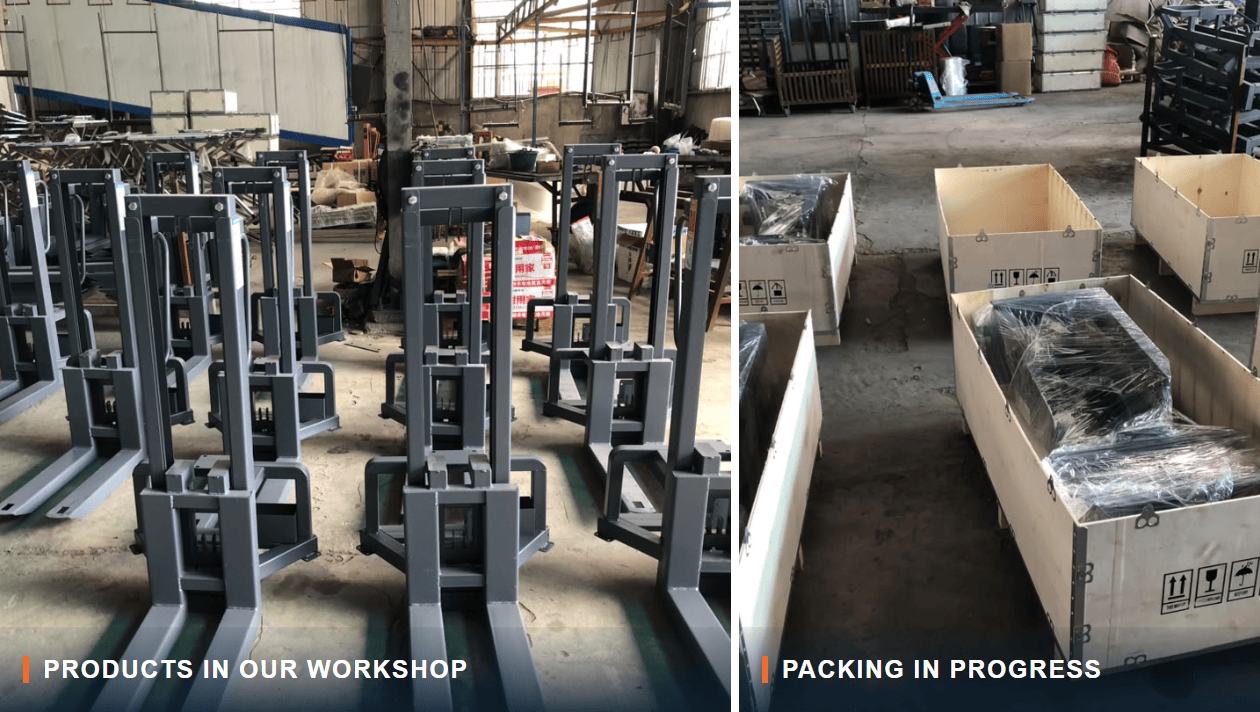
That discipline guides the ZGHELPLIFT range of compact lifts, stackers, lifting platforms and installation equipment. Our R&D work focuses on practical refinements to structures, controls, assembly and inspection. For distributors, contractors and end users, our sales process begins with the application, then works through the right model, OEM needs, packing, documentation and after sales scope for the destination market.
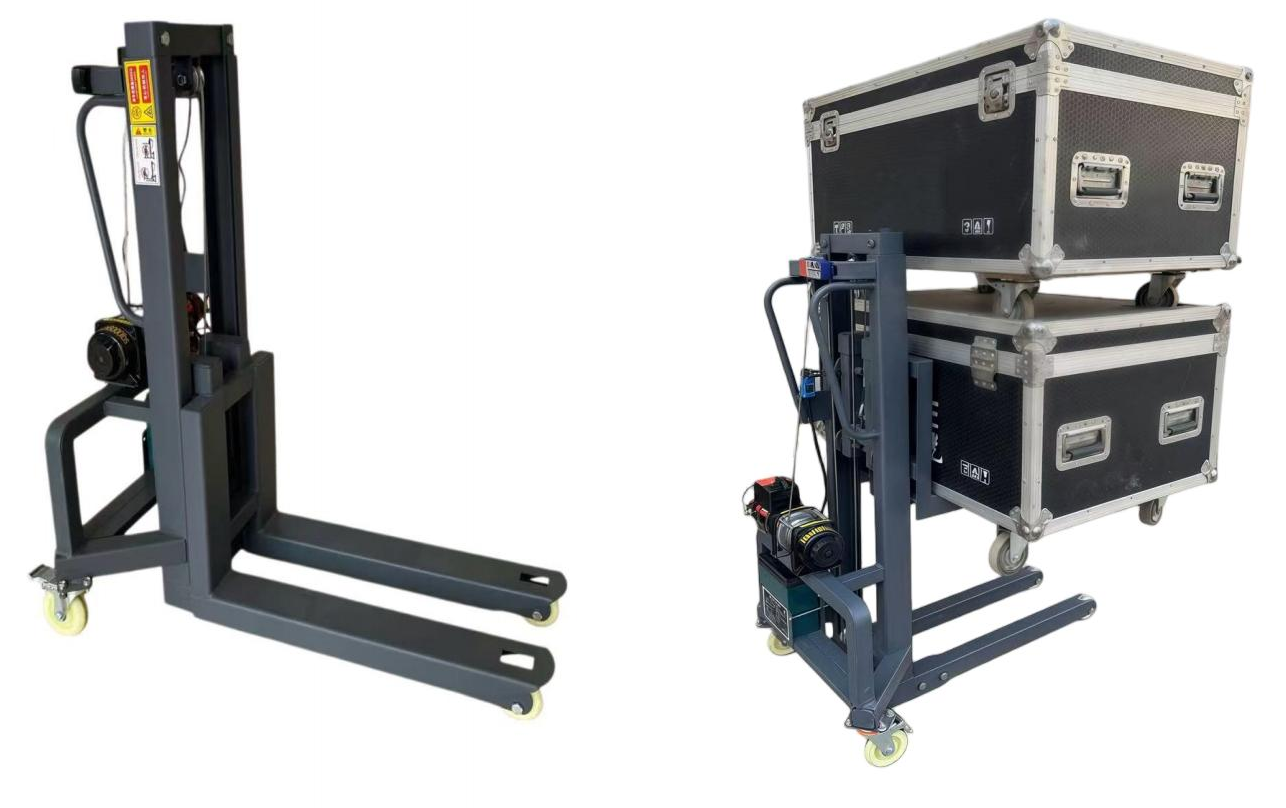
The compact material lift is one example of this approach. It is a battery powered, fork based machine for raising and positioning light loads. It is intended for materials, not people. Its purpose is to give teams a practical lifting option when the load, transfer height and work area call for something more focused than a larger handling machine. |
The problem behind a compact lift
In many small sites, the difficult part of a handling task is not moving a case across the floor. It is raising that case to a shelf, a work surface or a handoff point, then repeating the task as the day continues. A stage crew may handle flight cases of different widths. A stockroom may need to position boxed goods in a limited aisle. An exhibition team may work around temporary displays, entrances and shared access routes. These jobs differ, but each needs a lift chosen for the real load and the real space.
That is why we start a technical discussion with questions rather than a maximum-capacity claim. How heavy is the complete load, including its case or packaging? Where is its center of gravity? How high does it need to go? How often will the task be repeated, and what route must the machine travel? The answers determine whether the compact material lift is suitable, which model to consider and which details need a closer review.
Design choices that matter in daily use
Fork fit for changing loads
The listed lift has adjustable fork arm width and 60 cm forks. Adjustable spacing can help when goods and equipment cases vary in width, but it does not make every load suitable. The support points, load footprint and center of gravity must match the approved configuration. For a buyer handling several case sizes, this is a useful feature only when the dimensions of those cases are checked against the machine's current drawing and operating guidance.
Power information before the next task
The listed configuration uses a 12 V, 20 Ah lead acid battery, with a battery level display and overcharge protection. Seeing the charge state helps a team plan charging around its work. The catalog does not provide a universal operating time, and one should not be inferred from the battery rating alone. Load weight, lift frequency and site conditions all affect duty cycle. Buyers with frequent lifting work should describe that pattern in the enquiry and ask for the model's current operating guidance.
A design that still requires inspection
The product data lists a double wire rope design. This is a feature to understand in the context of the whole machine, not a substitute for inspection or operation within the rated limits. Before use, the operator needs the current manual and maintenance instructions for the exact model. During procurement, a buyer should also confirm which parts are covered by the warranty and how wearing parts and service questions will be handled.
Compactness with a measured route
The three listed machines have net weights from 55 to 65 kg. Their compact format can be useful in a small site, but the word "compact" cannot answer whether a machine will pass a particular doorway, fit an elevator or move safely over a particular floor. Those decisions require the actual route, floor conditions, access dimensions and current machine drawing. Net weight is also not a claim that one person can carry the lift.
Where the lift can fit the workflow
Stage and performance equipment
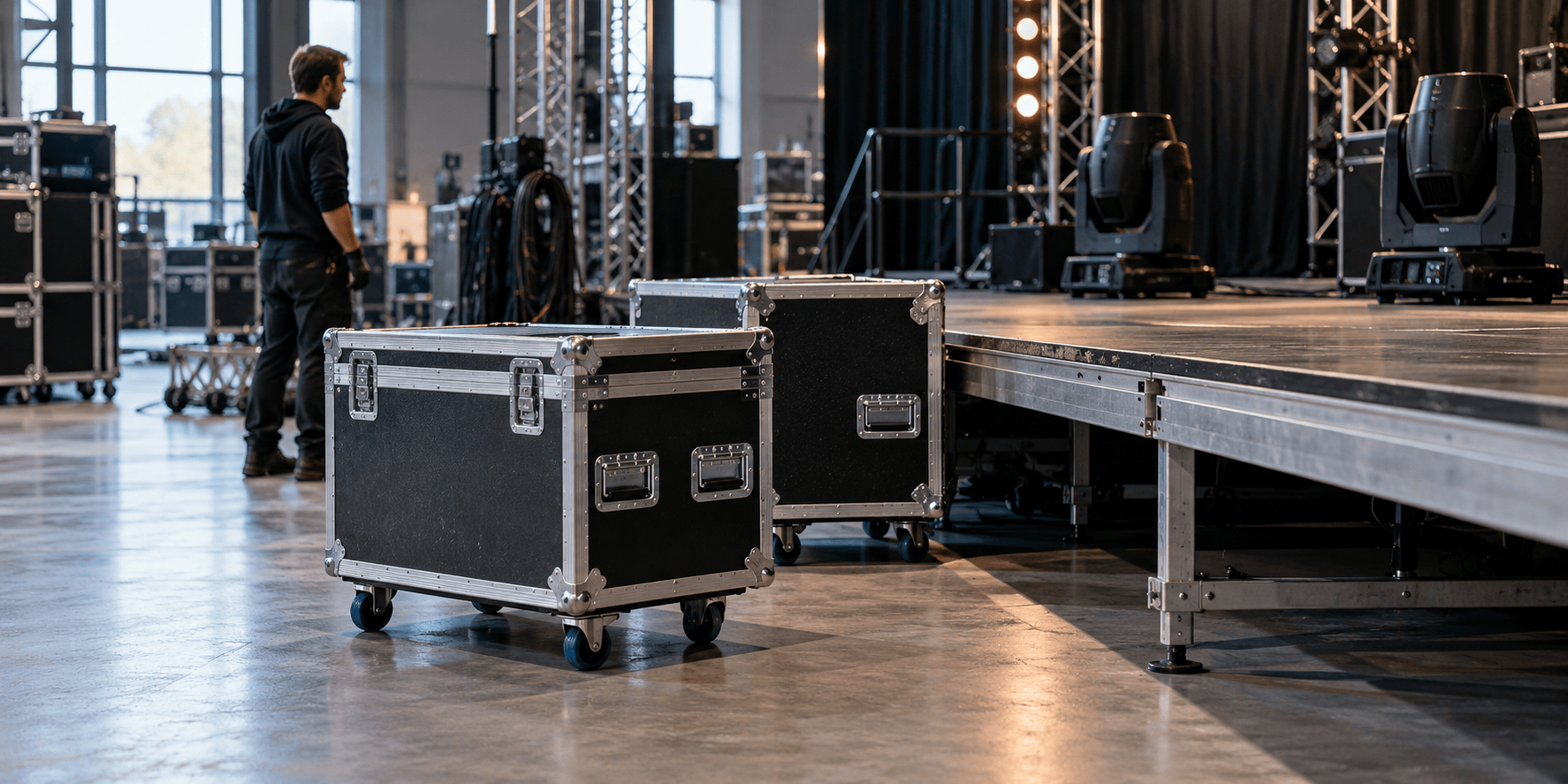
Audio and lighting flight cases are common examples in the catalog. The useful question is not simply whether a case weighs less than the rated capacity. The team must check how the case sits on the forks, where the load is centered and the height of the handoff point. Where those conditions fit the selected model, a compact lift can provide a controlled lifting step between floor level and the next stage of the workflow.
Small warehouses and retail stockrooms
Short distance stacking, loading and unloading of light goods are listed applications. In a small stockroom, the benefit may be a way to position goods at a transfer height without planning around a larger machine. The buyer should still check aisle access, floor quality, load dimensions and how often the machine will be used. A 250 kg rating on one model does not mean the tallest model has the same rating.
Exhibition and display work
Exhibition sites often combine temporary layouts with limited movement space. The lift may help position display materials or equipment cases, provided the route and load geometry are suitable. Before choosing it for a venue, check entrances, elevator capacity where relevant, floor restrictions and the space available to approach the handoff point. The goal is to match the equipment to the sequence of work, not just to a photograph of the finished display.
Choose a model by load and height together
The listed Compact Material Lift family has three model choices. The two shorter models are rated at 250 kg; the 2.0 m model is rated at 200 kg. These figures belong to specific configurations and should not be combined into a single "250 kg at 2.0 m" claim.
MODEL | RATED CAPACITY | LIFT HEIGHT | NET WEIGHT |
ZGHSBXZCJ120 | 250 kg | 1.2 m | 55 kg |
ZGHSBXZCJ160 | 250 kg | 1.6 m | 60 kg |
ZGHSBXZCJ200 | 200 kg | 2.0 m | 65 kg |
Begin with the heaviest complete load, including any container or packaging. Then confirm the required lift height and the load's dimensions and center of gravity. If the task calls for 2.0 m of lift with a 250 kg load, none of the three listed configurations meets both figures. Ask about another configuration or a different handling plan rather than selecting from headline numbers.
Make the enquiry specific
A useful enquiry describes the load and the site. Share the load weight and dimensions, target height, handling frequency, route conditions, available power and any access limits. Add the quantity, destination, desired packing and any OEM branding or finish requirements. This gives the sales and technical teams a basis for discussing a model and the documents needed to review it.
Before confirming an order, request the current model specification and drawing, operating manual, applicable conformity documents, and the agreed warranty and spare parts scope. Review the packing and delivery terms for the destination market. These steps make the final product choice easier to check and reduce the chance of a mismatch between a general product description and the machine supplied.
Tell us about your lifting task
If you are planning a stage setup, managing a compact stockroom or preparing an exhibition, tell ZGHELPLIFT what needs to be lifted and where it needs to go. We can help shortlist a compact material lift model and work through the configuration, documentation and order details for your project. A clear brief is the best starting point for a useful recommendation.

Hello, friend! Just tell me what your requirements are for this product
and I will help you handle your purchase needs for it.