
Get Support
+86 18055890315
From a lifting question to a shipped order
-
 By: ZG-Helplift
- Nov 25, 2026
- 1 Visit
Company perspective / Overseas customer stories
A clearer path from enquiry to shipment
How ZGHELPLIFT connects equipment selection, commercial clarity and overseas purchasing needs.
Ask about your project
An overseas buyer rarely starts with every answer. They start with a job that needs doing.
A forklift must reach the right height. A material lift must suit a construction task. A machine must be supported in a way that matches its weight and shape. Alongside those technical questions come practical ones: What exactly is included in the price? Where does the shipping service end? Which documents need to be checked before the equipment leaves?
For ZGHELPLIFT, these questions define the work of a lifting equipment supplier. The value of a quotation lies in how clearly it connects a product configuration with the buyer’s task, operating conditions and delivery requirements.
The four customer stories below began with different enquiries. Each led to an order that ZGHELPLIFT subsequently shipped. Together, they show the range of decisions behind an overseas equipment purchase.
The company behind the conversation
Capability that buyers can put to work
Fuyang Zhugao Mechanical Equipment Co., Ltd., operating under the ZGHELPLIFT brand, focuses on material lifting, handling and equipment installation applications.
Product scope
Start with the task
Our product range covers compact material lifts, forklift handling equipment, installation lifts and related lifting platforms. This gives the discussion a practical starting point: the type of movement, support and working height the job requires.
Explore the ZGHELPLIFT equipment catalogue for the available product families.
Technical judgement
Read beyond the load rating
Capacity, lifting height, footprint, support geometry and access dimensions need to be considered together. A smaller machine may improve access while leaving less room for a wide or uneven load.
These design tradeoffs make a precise configuration more useful than a headline maximum.
Commercial clarity
Define the full offer
The buyer needs a model reference, configuration, quotation basis and delivery scope that can be reviewed together. Packaging, timing and destination documents belong in that discussion.
The same discipline supports communication from the initial enquiry through to shipment.
A practical standard
A useful quote gives you a clearer choice.
A clear specification gives the order a shared reference.
In a competitive equipment market, buyers need to understand what sits behind a price. Materials, components, support arrangements and the operating duty all deserve attention. Our approach is to keep those questions connected to the exact product under discussion.
Customer orders / Colombia · Zimbabwe · Rwanda · Lebanon
Four buyers. Four different starting points.
These are the questions that preceded four shipped orders.
The conversations shown are from the enquiry stage and have been anonymized. Order and shipment status was confirmed by ZGHELPLIFT. Individual delivery dates and supplied configurations are not specified here.
Colombia Order shipped
A price that could become a purchasing decision
The buyer asked for one forklift, a pro forma invoice and a price under FCA Shanghai or ex works terms. Payment, delivery time and import classification were part of the same conversation. The order was subsequently placed and shipped.
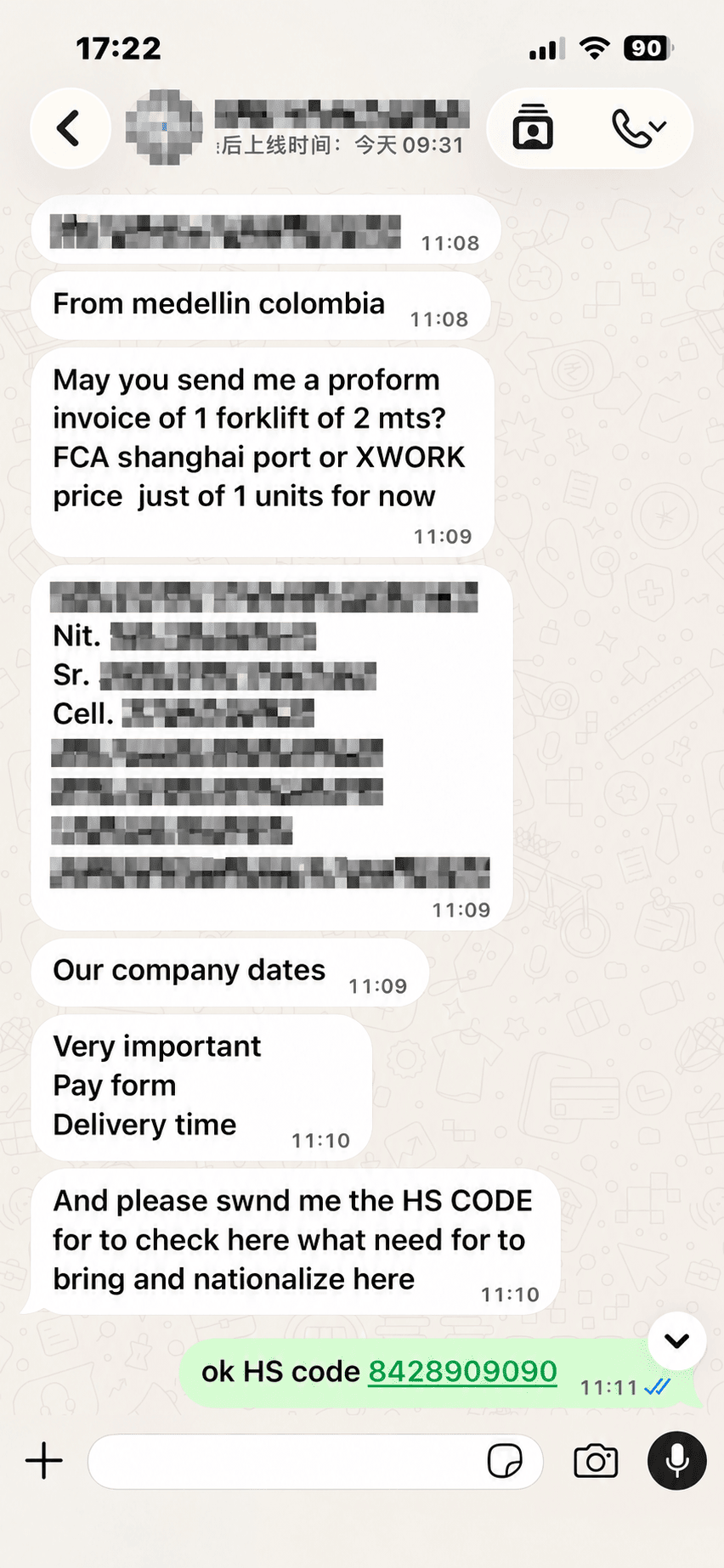
One forklift · Pro forma invoice · Commercial terms
The purchasing problem
A unit price leaves important questions open. The buyer also needs to know which configuration is being offered, what the delivery term covers and which information is available for import planning.
The technical detail that matters
The message described the forklift as “2 mts.” A precise quotation should define that dimension and relate it to the load weight, load size, fork arrangement and working space. The final specification gives both parties a common reference for the order.
The customer placed an order and ZGHELPLIFT shipped it.
Zimbabwe Order shipped
A lifting task with a destination beyond the port
This customer requested a portable vertical material lift for construction, with a target height of 10 m and a requested load of 100 kg. The enquiry named Kwe Kwe, Zimbabwe, via Beira, Mozambique. The customer went on to order, and the order was shipped.
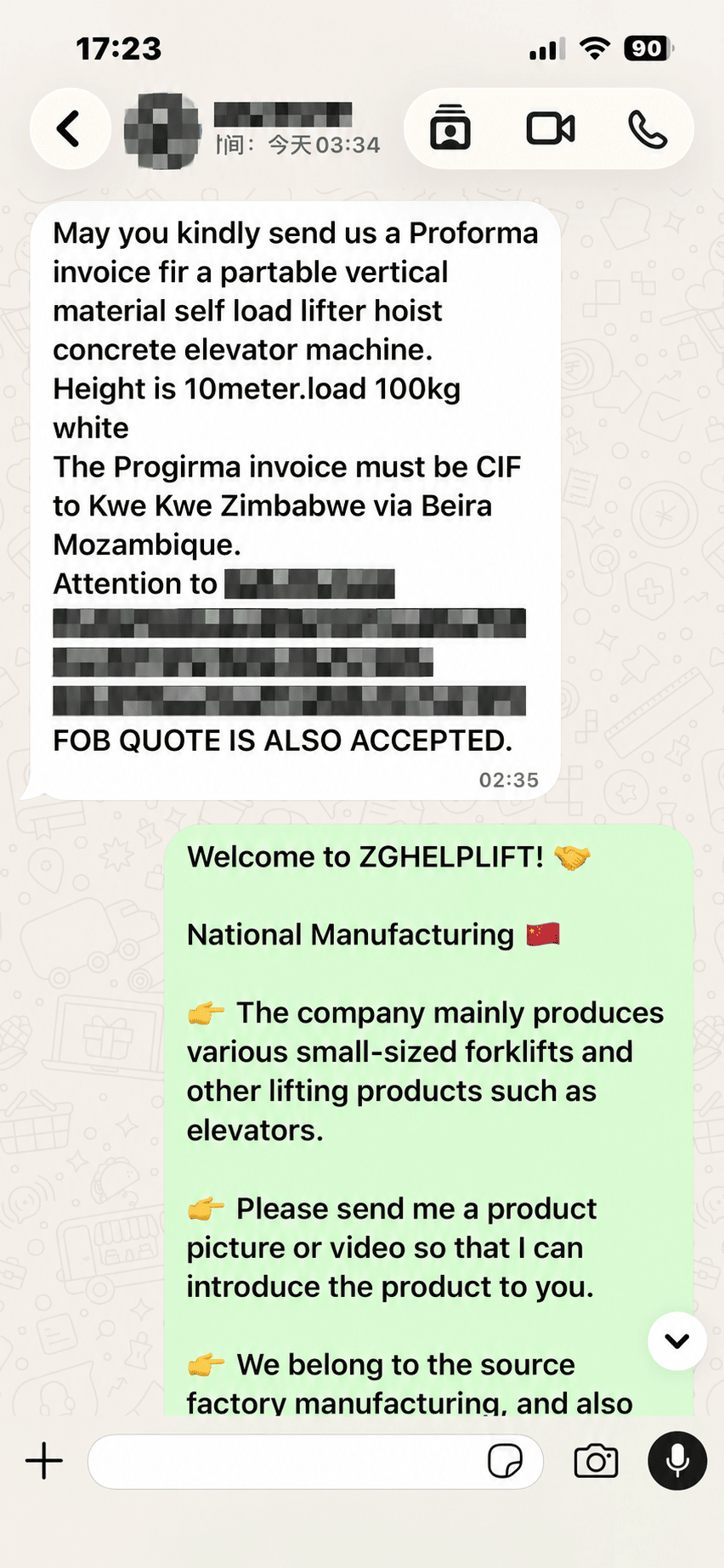
Construction task · Requested height and load · Shipping route
The purchasing problem
The equipment and the transport route have to be considered together. Reaching a port and reaching an inland jobsite involve different responsibilities, costs and arrangements.
The technical detail that matters
Height and load are the start of a specification. Load dimensions, centre of gravity, support method, available base area and ground conditions also affect suitability. The 10 m and 100 kg figures here are the customer’s requested duty, rather than a published rating for a named model.
The customer placed an order and ZGHELPLIFT shipped it.
Rwanda Order shipped
The question every equipment buyer needs answered
“Can it lift this machine?” After requesting a quotation, the buyer brought the discussion back to the actual task. The order was subsequently completed and shipped. The practical question behind it is relevant to any buyer choosing handling equipment.
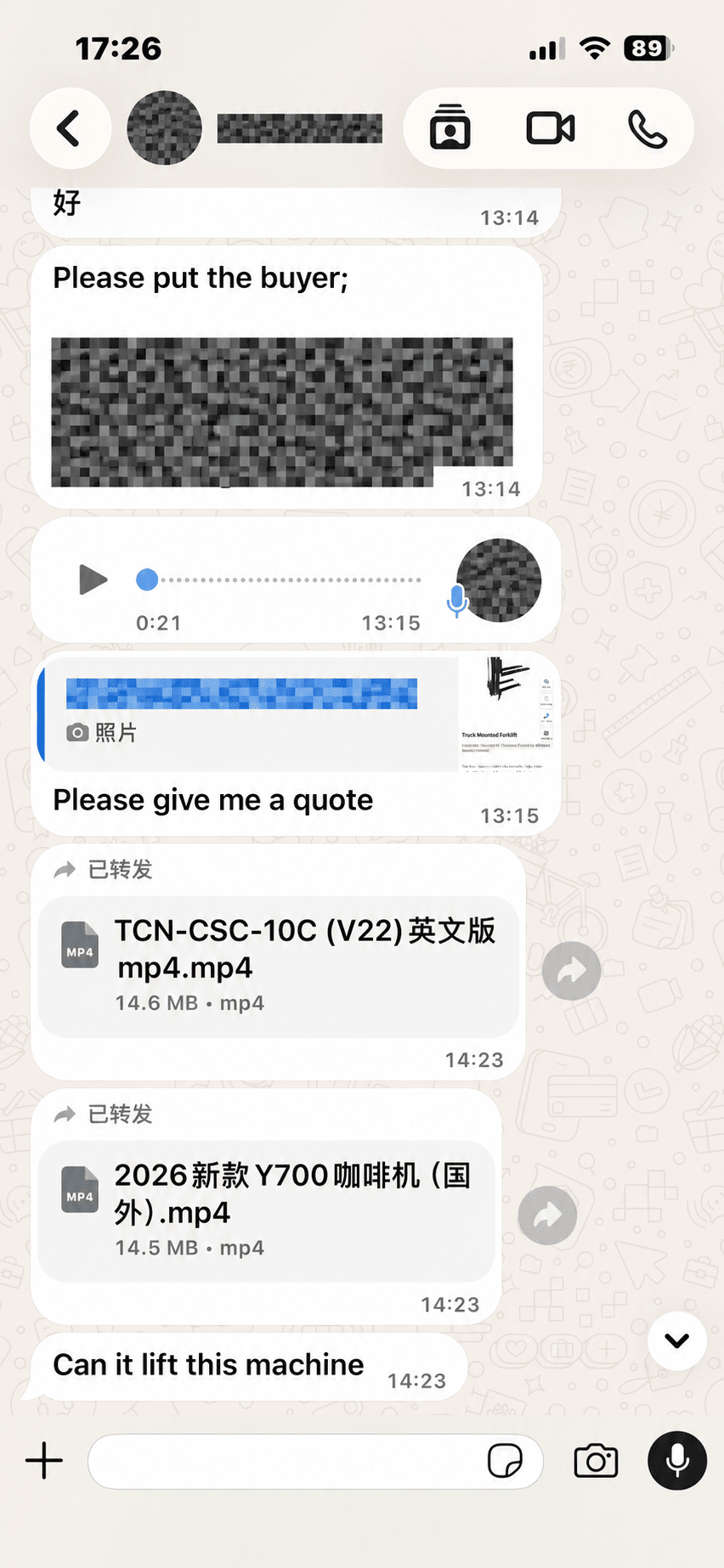
Machine handling · Load support · Site access
The purchasing problem
A machine can fall within a stated weight limit and still require a different support arrangement or more working space. The buyer needs an answer that relates to the whole load and the site.
The technical detail that matters
Start with total machine weight, including attachments, then check dimensions, centre of gravity and suitable support points. Add lifting height, access clearances and floor conditions. A useful recommendation makes its assumptions clear so the buyer can check them.
The customer placed an order and ZGHELPLIFT shipped it.
Lebanon Order shipped
A product image can be enough to begin
The first request was simple: the customer shared a product image and asked for more information. That conversation later led to an order that ZGHELPLIFT shipped. Buyers do not always arrive with a model code or a complete technical brief.
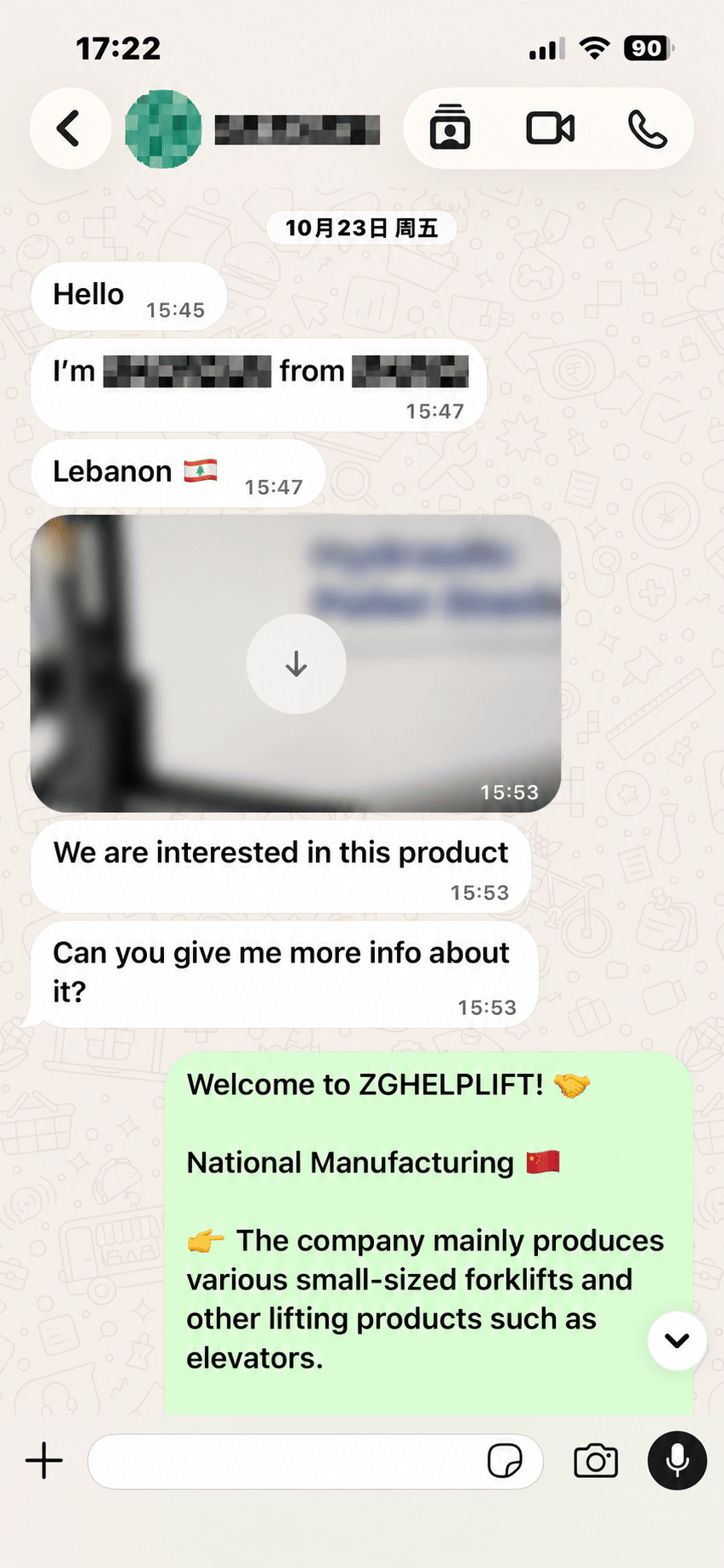
Product identification · Application discussion · Configuration
The purchasing problem
The buyer recognises a possible solution but needs to understand what it does, which configuration applies and whether it fits the intended work.
The next useful step
Identify the pictured equipment, then describe the load, target height and operating environment. Those details turn interest in a photograph into a product discussion with a clear purpose. A buyer can begin with the information already available and refine it with the supplier.
The customer placed an order and ZGHELPLIFT shipped it.
From interest to a reviewable proposal
Make the next conversation useful
01 / Describe the work
Bring what you already know
A product image, load photo, approximate weight, target height or site sketch can open the discussion. You can begin before you have selected a model.
02 / Clarify the configuration
Connect the details
Discuss dimensions, load support, access, power and operating conditions. Identify which information is needed to assess an appropriate configuration.
03 / Review the offer
Know what you are comparing
Review the model, accessories, price basis, timing, packaging and delivery scope together. Confirm the documents relevant to the destination and equipment before shipment.
A considered purchasing decision also leaves room for limits. Product certification should be checked for the specific model and intended use. Import classification follows the destination’s customs requirements. Freight terms should name the relevant place or port. These details help buyers compare offers with a common basis.
Before you enquire
Questions buyers often need to settle
Can I enquire without knowing the model?
Yes. Start with a product image or the task you need to complete. A load photo, approximate weight and target height help the team understand the application.
Can a photo show whether a machine is suitable?
A photo helps identify the load and the working environment. Weight, dimensions, centre of gravity, support points and site conditions are still needed for a specific assessment.
What should I ask about the quoted price?
Ask which model and configuration it covers, which accessories are included, how the equipment is packed, and which delivery term and named place apply.
Do the customer conversations represent completed sales?
Yes. ZGHELPLIFT confirmed that all four featured customers placed orders and that their orders were shipped. The screenshots show the earlier purchasing discussions.
Can I ask about documents for my destination?
Yes. Tell the team the destination country and intended use. Ask which technical and conformity documents are available for the proposed model and what needs to be checked with your import adviser.
What happens when I use the quotation form?
Hello, friend! Just tell me what your requirements are for this product
and I will help you handle your purchase needs for it.