 By: ZG-Helplift
ZGHELPLIFT / PRODUCT INSIGHT
The green compact material lift is a different configuration of ZGHELPLIFT's compact lift family. Its catalogue description highlights a handle-mounted control layout. That can matter when an operator works beside flight cases, display equipment or stock in a confined area, but the choice should begin with where the operator can stand and see the load throughout the lift. A control location is useful only when the load, route and working position make sense together.
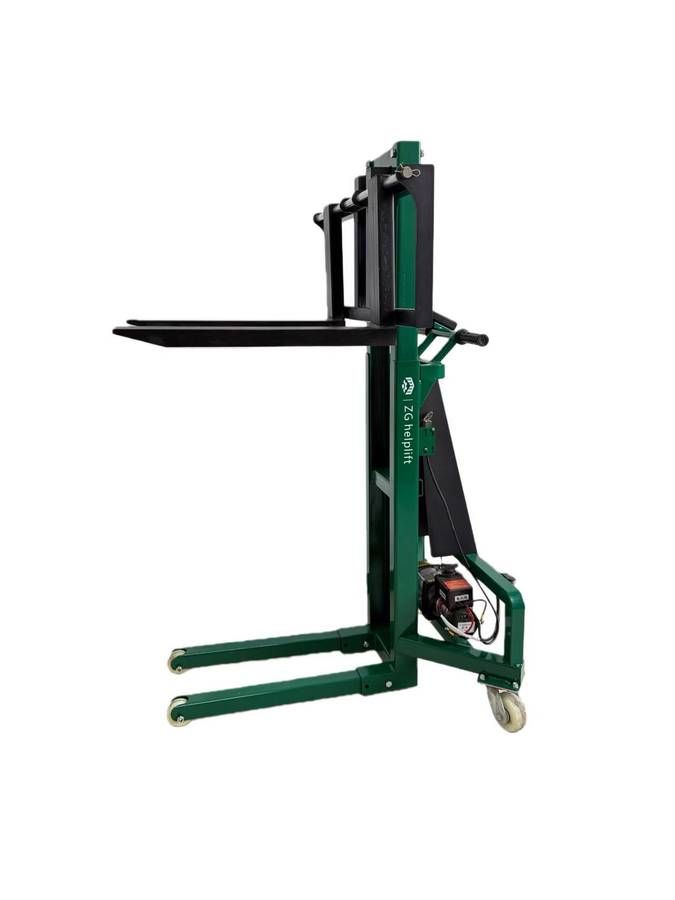
Draw the operator's position before choosing a control layout
Place a simple plan of the work area beside the product image. Mark the load pick-up point, the receiving height, the direction the forks enter, and the clear area for a person to stand. Then ask whether the handle can be reached without leaning into the moving load or losing sight of the fork tips. The catalogue establishes where the controls are mounted; it does not document control reach, emergency-stop arrangement or the safe standing zone for every configuration. Those details belong in the current operating instructions and a site review.
For a stage crew, this might be the space between stacked flight cases and a wall. For a retailer, it may be a back room with shelving on both sides. In either case, the operator should be able to approach the load squarely and make the transfer without using the machine as a substitute for a properly supported work platform.
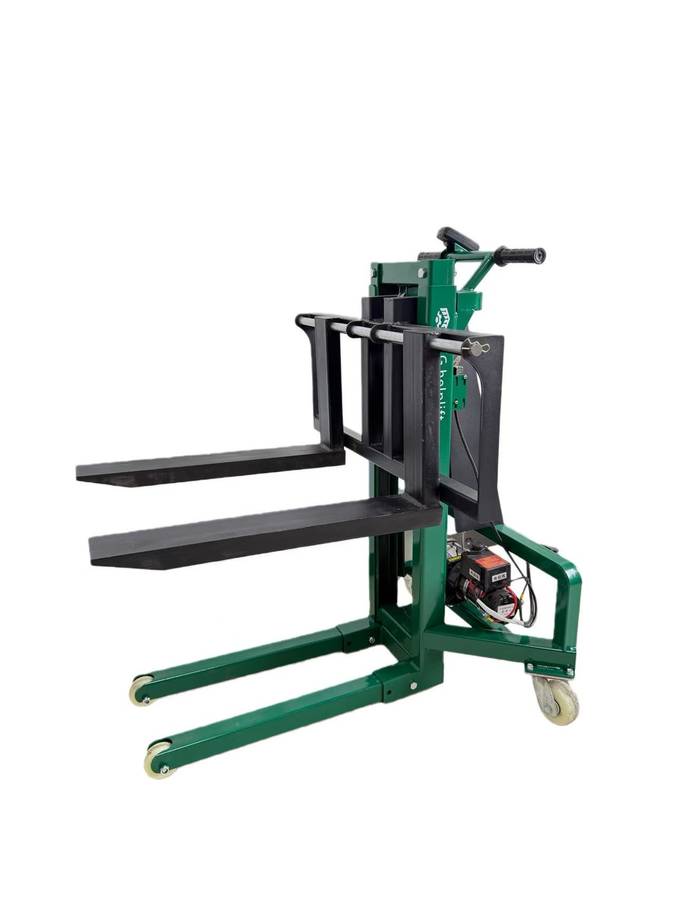
The green finish is not the specification
Catalogue model ZGLSBXZCJ120 is listed at 250 kg and 1.2 m lift height; ZGLSBXZCJ160 at 250 kg and 1.6 m; ZGLSBXZCJ200 at 200 kg and 2.0 m. The 2.0 m option is not a 250 kg option in this catalogue. The series lists a 60 cm fork length and 12 V, 20 Ah lead-acid battery. It also describes adjustable fork width, a battery level display and a double wire rope arrangement. Those entries identify features to examine, not a substitute for a current drawing, inspection record or operating limit.
The images show how the handle, fork carriage and lower frame are arranged. They do not identify the exact SKU of each photographed unit. A buyer comparing the green machine with the other compact lift should request side-by-side dimensions and configuration details rather than assuming that similar quoted capacities mean identical footprint, control access or packed weight.
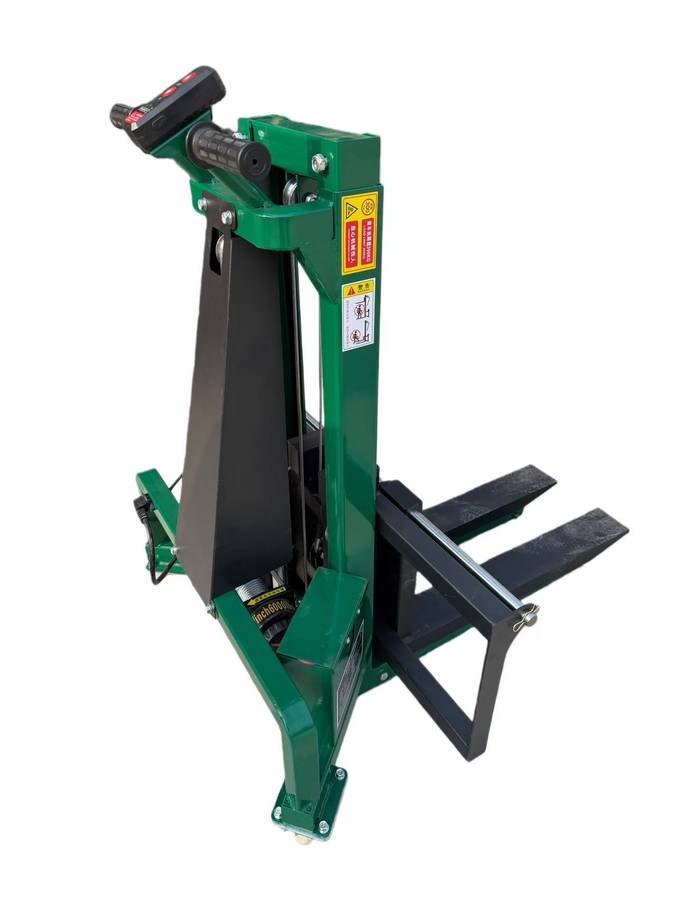
Check the load contact and the route together
Adjustable forks help with changing case and package widths, but the underside of each load still needs suitable contact points. Measure the clear fork entry, supported depth and centre-of-gravity position. Include wheels or feet attached to the case in the drawing. A photograph of the underside often reveals more than a top-view dimension. If a load is irregular, ask whether a suitable approved platform or fixture is available; do not improvise support from the fork tips.
Next, measure the narrowest door and turning point. The catalogue lists machine heights of 1.04 m, 1.24 m and 1.53 m for the three green models. It does not prove fit through any particular door, lift or vehicle. Floor condition, approach angle and clearance with the load must be considered alongside those figures.
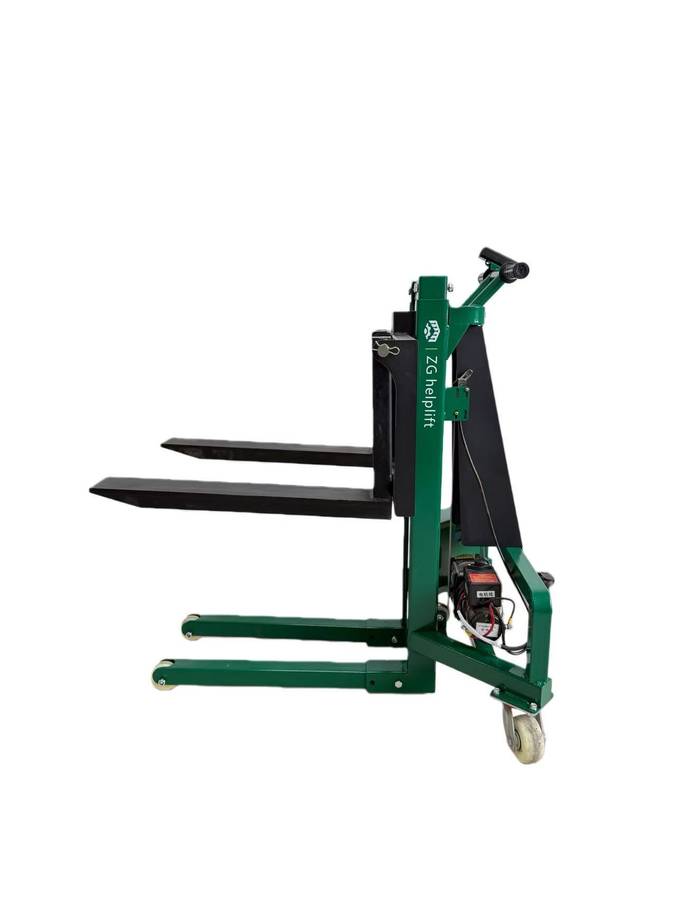
Turn the comparison into a useful enquiry
ZGHELPLIFT combines product discussion with overseas sales, so the most useful next step is a configuration review against the buyer's work. Share the load weight and underside, pick-up and receiving heights, route dimensions, available operator space, power and charging arrangements, expected daily cycles and destination market. Ask for the latest model drawing, control description and relevant documents for the offered machine. A handle-mounted control is an important design difference, but it should be chosen for the way the work is actually performed.