
 By: ZG-Helplift
ZGHELPLIFT / PRODUCT INSIGHT
The case has made it through the venue door. Its destination is higher up, but the crew still has to get it along the corridor, turn into the work area and place it without an awkward hand-off. A compact material lift may help with the final rise. Whether it can help with this case is decided much earlier, at the point where the forks meet its underside.
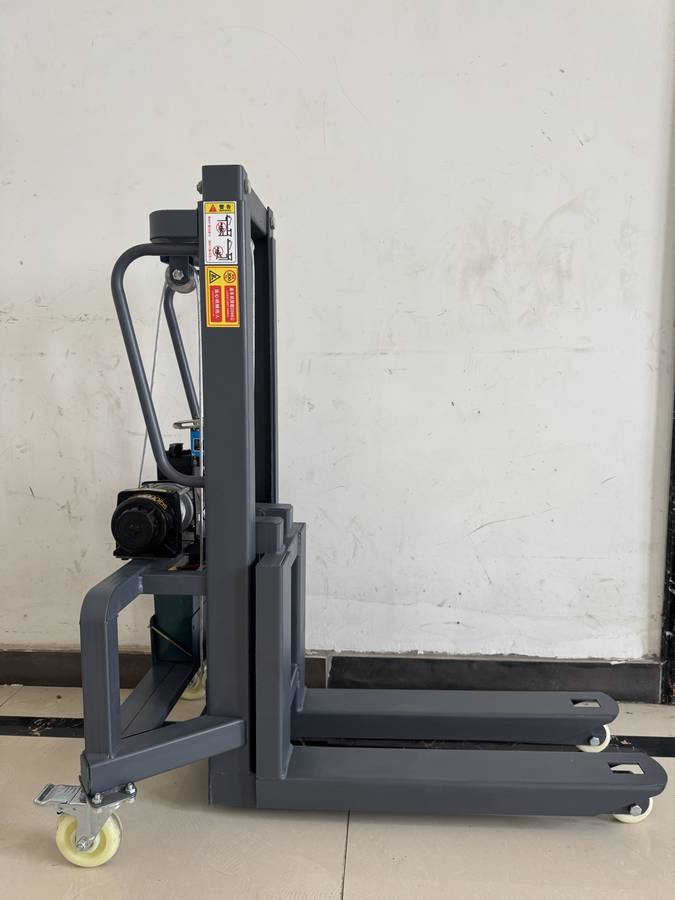
The first obstacle is almost invisible from above
From the top, two flight cases can look alike. Turn them around and one may have firm runners while the other rests on castors and a recessed panel. If the forks enter beneath the wrong part, the case may have no suitable support even though its total weight is below the lift's catalogue rating. The useful first photograph is therefore of the bottom, with a tape measure showing the surfaces that can actually carry the load.
ZGHELPLIFT's compact lift family is listed with 60 cm forks and adjustable fork width. Those details make a fit discussion possible; they do not settle it. The crew still needs to know the loaded weight, the distance between sound support points and where the centre of gravity sits. A case that projects beyond the forks or shifts as it rises needs a different support plan, not a confident answer based on capacity alone.
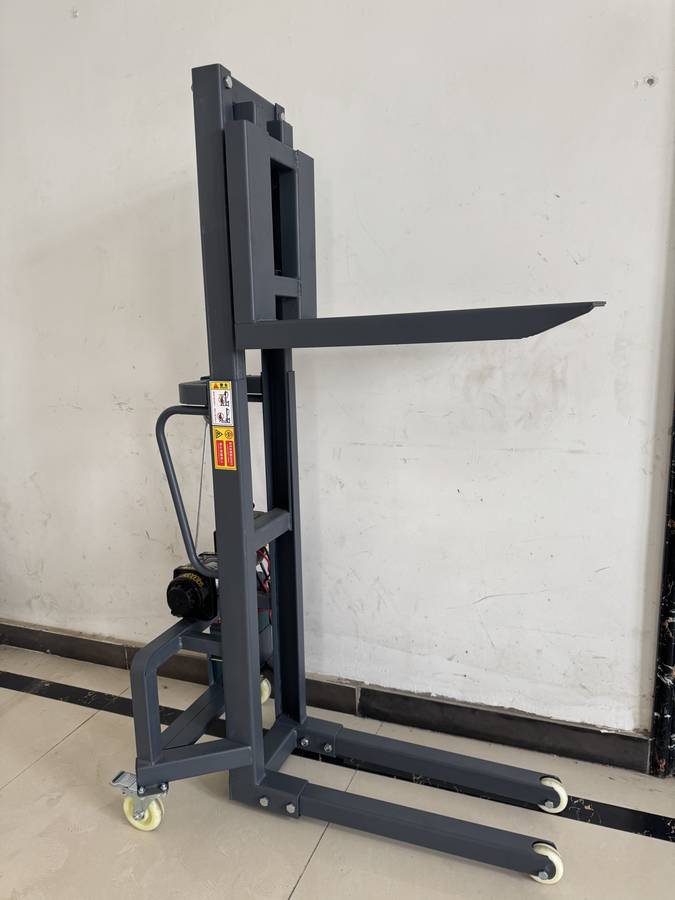
Then the corridor changes the question
Suppose the case can be supported. The lift now has to follow the same route as the crew. A threshold, a passenger-lift entrance or a tight backstage turn can end the plan before the case reaches its destination. It is tempting to read “compact” as a promise of access. Instead, measure the narrowest opening, the turning space and the floor along the loaded route. Include the case itself in those measurements.
The required placement height also changes the model choice. The catalogue lists ZGHSBXZCJ120 at 250 kg and 1.2 m, ZGHSBXZCJ160 at 250 kg and 1.6 m, and ZGHSBXZCJ200 at 200 kg and 2.0 m. The higher option does not retain the shorter models' 250 kg figure. This matters when a case must reach an elevated receiving surface: the right height is useful only if the particular model can carry the particular load under its stated conditions.
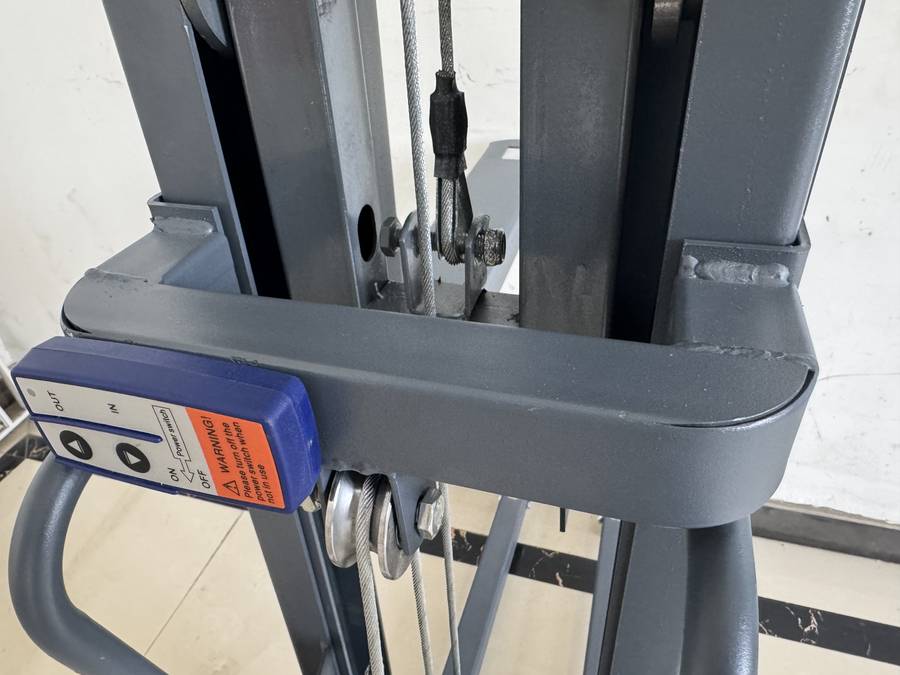
At the hand-off, a small detail becomes important
Near the receiving surface, the crew needs room to position the lift, see the load and complete the transfer. Measure that surface height as well as the available overhead clearance. The catalogue gives machine heights of 1.04 m, 1.24 m and 1.53 m across the three models, but the loaded working envelope must be checked against a current drawing. The photographs here show the mast, forks and mechanical details; they cannot prove the route or the support of an unseen case.
The family is described with a 12 V, 20 Ah lead-acid battery, a battery-level display and overcharge protection. For a crew moving between venues, charging arrangements are part of the day. Battery capacity alone does not tell them how many lifts they can complete; that question needs the offered configuration's current operating information.
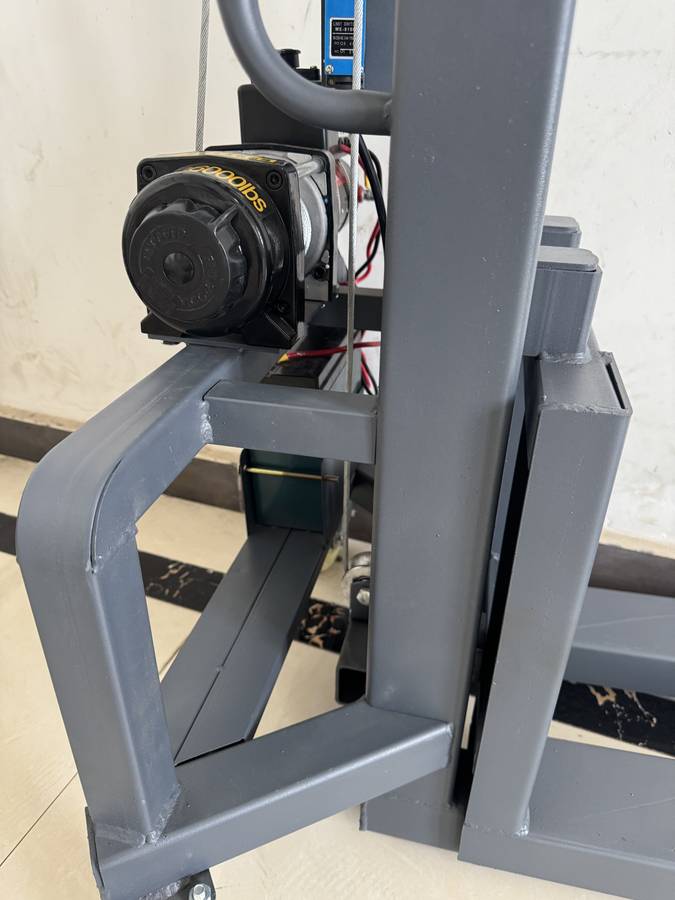
The most useful enquiry starts with the scene the crew actually faces: a loaded case, its underside, the route from door to work area and the final receiving height. Send photographs with dimensions, expected handling frequency and the destination country. ZGHELPLIFT can then discuss a specific model and fork arrangement against those facts. The decision begins beneath the case, before anyone tries to raise it.