
 By: ZG-Helplift
ZGHELPLIFT / PRODUCT INSIGHT
A part is waiting near floor level while the next operation happens on a bench. The distance between the two is short, but carrying the part by hand may be inappropriate, and a full-size warehouse truck may have no room to turn. A portable hydraulic stacker looks like a practical answer. Before choosing one, follow the part through the transfer: what holds it at the start, what supports it as it rises and where will it rest at the end? This is a typical workshop task, not a documented customer case.
The underside decides the first move
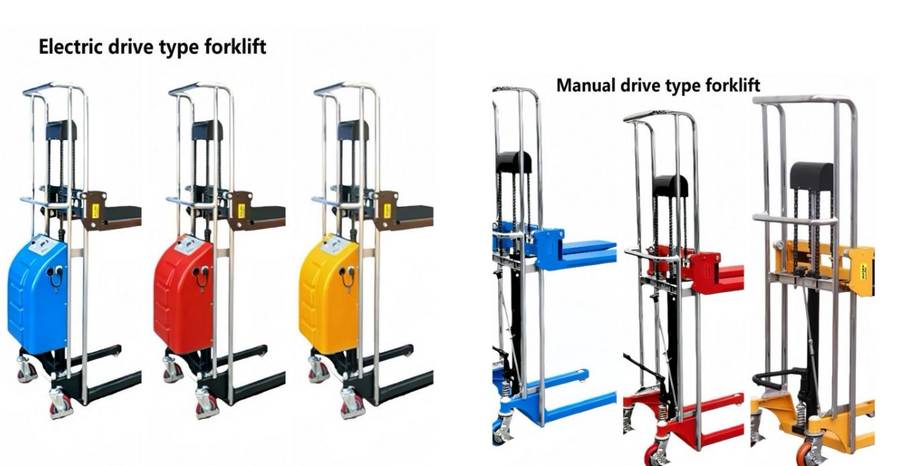
The catalogue shows both forks and a working-platform arrangement in this family. It lists forks at 550 mm width by 650 mm length and a platform at 650 × 580 mm. Those dimensions sound reassuring until the actual part is examined. A small machine component may bear on narrow feet; a carton may have no firm fork-entry point; a pallet may have bottom boards in the wrong places. In each case the question is not simply “Will it lift 400 kg?” but “Where is this load supported?”
Measure the part with its packaging, mark its centre of gravity and photograph the underside. If a platform is needed, confirm that it is included in the offered configuration, how it is fitted and what load distribution it permits. The catalogue illustrations show possible arrangements; they do not prove support for an unseen workpiece.
At the bench, height is only one of the limits
The range lists eight SKUs at a nominal 400 kg, with lifting heights from 0.85 m to 1.7 m. ZHLIFT-850 is listed as manual hydraulic at 0.85 m; ZHLIFTS-1100 as battery powered at 1.1 m; ZHLIFT-1700 as battery powered at 1.7 m. The bench height points toward a model, but the receiving method, overhead space and load dimensions decide whether the transfer can be completed.
The listed minimum lift position is 90 mm. It may help when approaching a low workpiece, but it does not prove that the forks will enter every pallet or pass beneath every machine base. Check the actual clearance and the path of the stacker's base legs. Please use the model code on your quotation. Similar names in photos may differ slightly.
The short trip can be the difficult one
Between floor and bench there may be a threshold, a tight turn or an uneven patch of workshop floor. Draw that route. A machine that reaches the target height may still be unable to approach the bench squarely. Confirm from the intended operating instructions whether and how it may travel with a raised load. “Portable” should not be read as a promise that one person can lift it into a vehicle or that it works on rough outdoor ground.
The choice between manual hydraulic and battery-powered lifting belongs in the same story. How often will the part move? Is charging available? The catalogue does not state lift speed, runtime or a measured ergonomic benefit, so those claims should not decide the purchase without further documentation.
Send ZGHELPLIFT the workpiece's weight, underside and dimensions, bench height, route sketch, floor condition, handling frequency and destination market. Ask for the current drawing and the exact fork or platform arrangement for the proposed SKU. The right stacker is the one that supports the part from the first contact through the final hand-off, not merely the one whose nominal capacity sounds sufficient.