 By: ZG-Helplift
ZGHELPLIFT / PRODUCT INSIGHT
A cabinet panel is beside the wall, its final position already marked above the worktop. Raising it is only one part of the job. The crew must bring a lifting table through the room, position it beneath the panel, and still have space to align and fix the cabinet. A stainless steel scissor table is worth considering when its platform, travel path and working height all suit that sequence.
Bring the table to the work, then measure the load
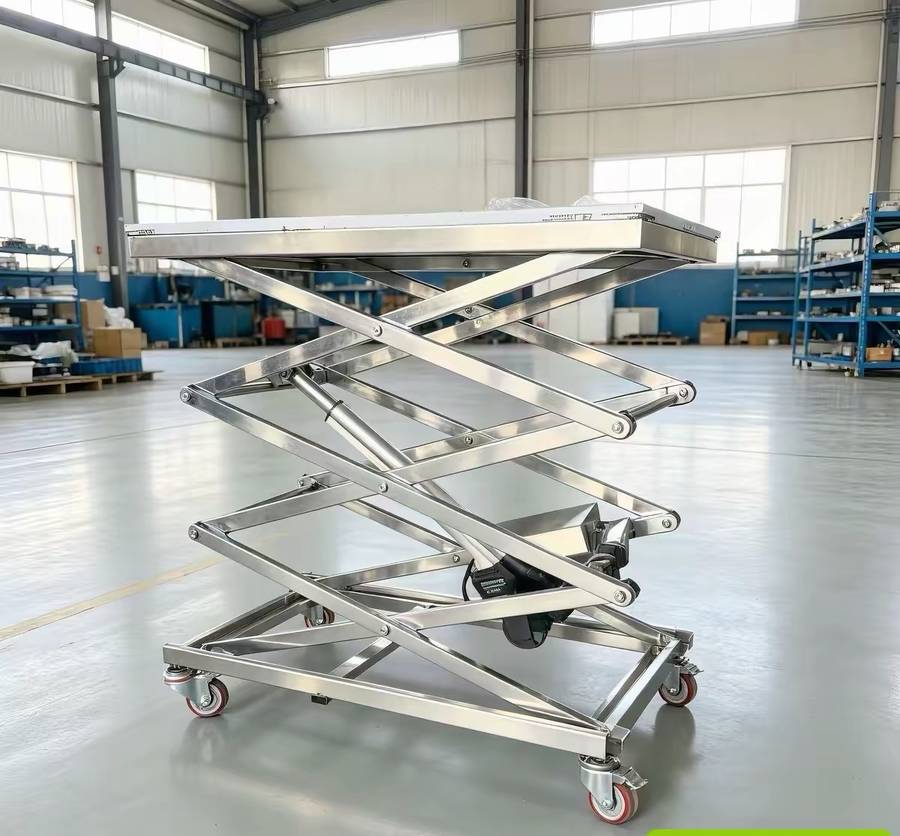
The ZGHELPLIFT catalogue lists model ZGBXGSJPT215 with an 85 × 37 cm platform, a 150 kg rated capacity and a 2.15 m lift height. The platform dimensions are often the first useful numbers for a cabinet installer. A wide panel may overhang a narrow support surface even when its weight is well below the rating. The buyer needs to know where the panel can actually bear on the table, where its centre of gravity sits, and how it will be restrained during positioning.
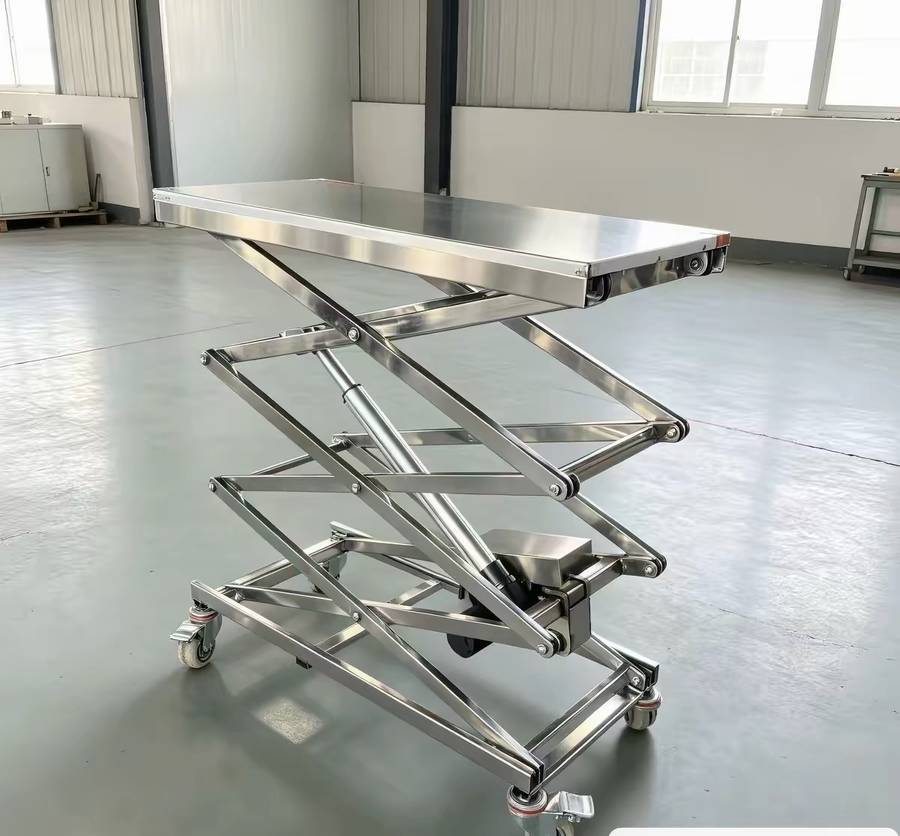
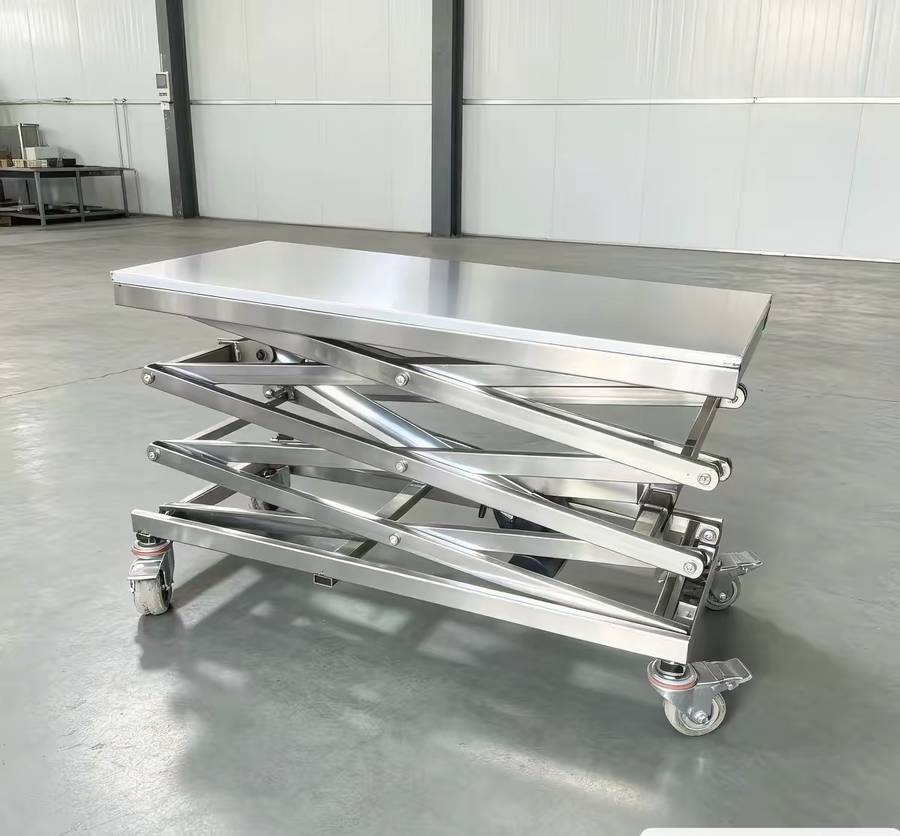
The product photos show a broad metal deck and a scissor mechanism beneath it. They do not show a particular cabinet securely supported. A drawing of the actual load and its intended contact points is a better way to discuss that question than assuming every panel will fit.
The route through the room is part of the lift
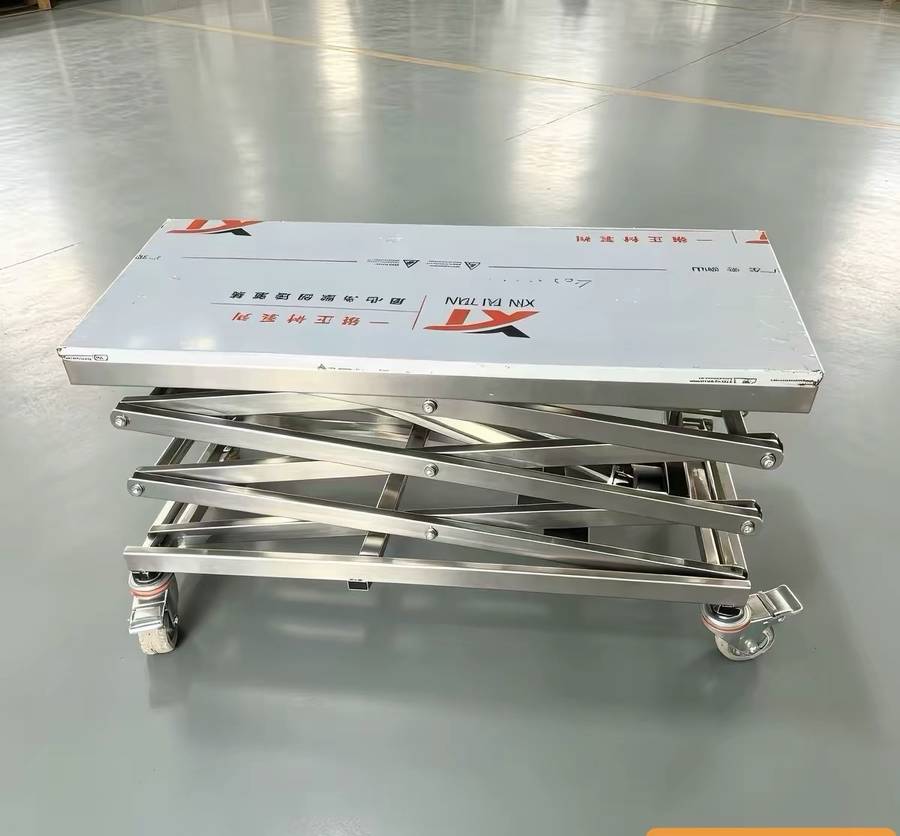
The catalogue gives a 27 cm minimum height in the collapsed position. That low state can help with loading and movement, but it does not by itself prove that the table fits through a doorway, around a kitchen island or under a partly installed cabinet. The photographed unit has swivel casters with brakes. The site still needs a clear route, suitable floor and enough room to set the brakes before lifting.
At the final position, the crew must be able to reach the fixing points without placing hands or tools in the moving scissor area. The load should be aligned by the method in the current operating instructions. A table is a positioning aid for material, not a substitute for the cabinet's permanent fixings or a platform for a person.
Power and the last few centimetres
The catalogue lists AC 220 V and DC 21–24 V supply options for this model. Which power arrangement is supplied for a specific order should be confirmed before planning a room without an available outlet. Near the final height, the important issue becomes the handoff: can the panel be held in the required orientation while the installers attach it, and can the table then be lowered and moved away without striking the completed work?
The answer may change with a projecting handle, a deep cabinet or an uneven floor. Those are not reasons to choose a taller rating blindly. They are reasons to measure the route and the load before committing to the method.
What to send for a useful recommendation
For an initial configuration discussion with ZGHELPLIFT, send the load's weight, dimensions and support points; the target height; door and passage widths; floor details; the available power supply; and photos of the installation area. The catalogue describes the product family, while the current technical file and operating instructions must confirm the exact supplied machine and its permitted use. With those details, the question changes from “Can this table rise high enough?” to “Can it complete this particular installation path?”