
 By: ZG-Helplift
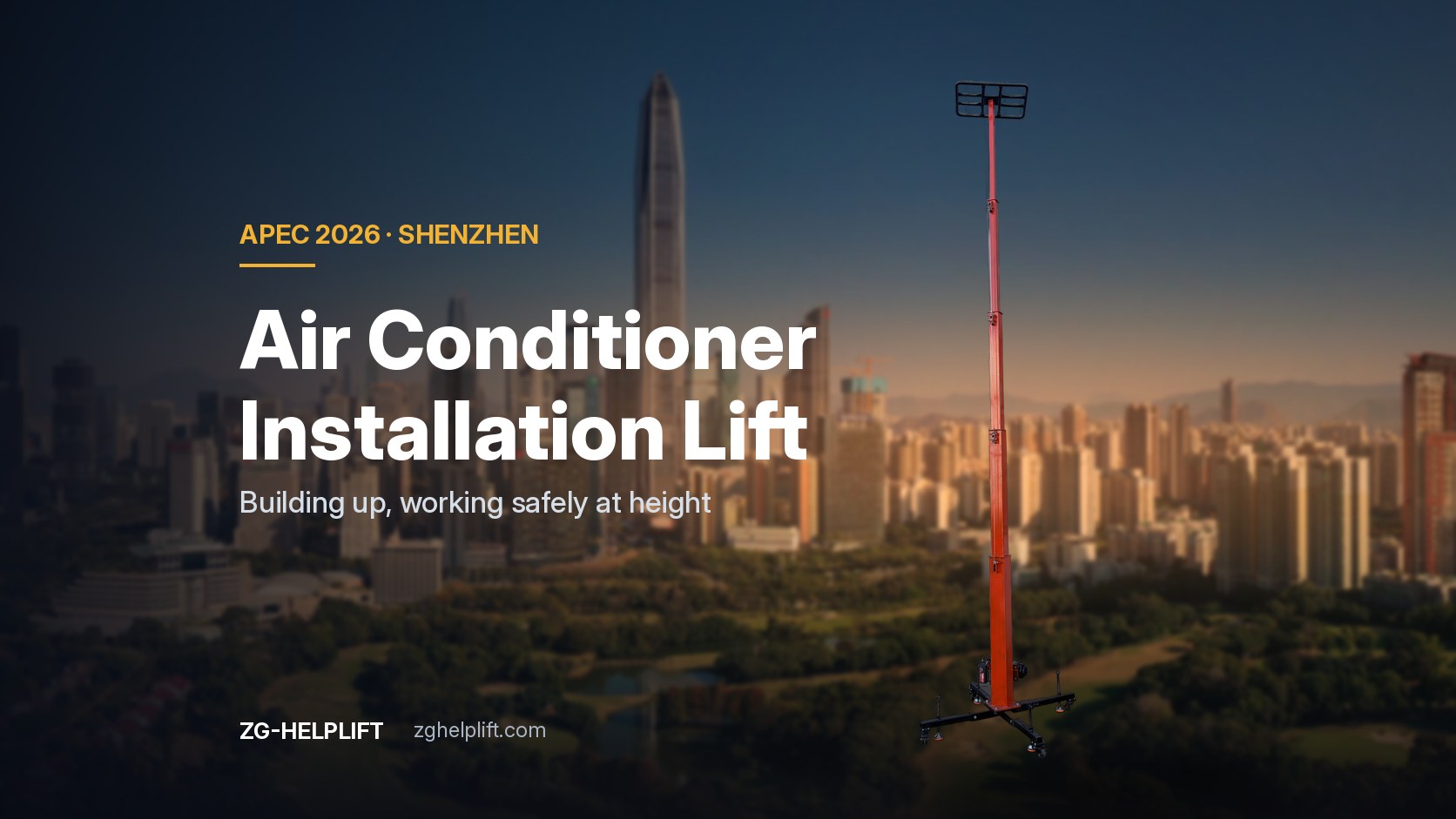
This is a story about an air conditioner installation lift. It starts in Shenzhen, China, where APEC leaders gathered on 18 and 19 November 2026.
Host President Xi Jinping welcomed US President Donald Trump and Russian President Vladimir Putin, who both attended in person. On 19 November the three held their first-ever trilateral meeting on the sidelines of the summit.
What APEC 2026 Said About Infrastructure, Workers and Small Firms

Beyond the headlines, the leaders' declaration made commitments that reach far from the summit hall. It promised to “enhance cooperation on quality infrastructure development and investment”. It stressed “preparing our workforce for the future of work”. And it encouraged “accessible, easy-to-use and cost-effective products and solutions” that help small businesses boost productivity and efficiency.
More Building Means More Work at Height
Infrastructure is not only roads and ports. Every new warehouse, factory and office block needs services, and many of them are fixed high on a wall. That is our observation, not APEC's, but anyone who installs air conditioners knows it well.
For a two-person installation team, a cost-effective solution can be as concrete as a lift that replaces a risky ladder climb. Sam, below, is a fictional installer. His afternoon will sound familiar to many HVAC teams.
The Wall That Was Too High
Sam had installed air conditioners for twelve years, and he could tell how a job would go from the first look at the wall. This one was going to be hard.
The customer wanted the outdoor unit mounted high on a warehouse wall, well above head height, with no balcony, no scaffold and no socket anywhere near the spot.
The usual approach was to carry the unit up a ladder in stages, one person pushing from below and one pulling from above. Sam knew how quickly that could go wrong: a shifted grip, a ladder foot on uneven ground, a unit that suddenly felt much heavier halfway up.
He did not need more muscle. He needed the unit to rise, stay steady, and stop exactly where the brackets were.
A scaffold for one unit would cost time and money. A rope and pulley was slow and hard to control. An extension cord across a busy yard was a hazard in itself.
Discovering a Battery-Powered Column Lift
That evening Sam searched for an AC unit lift a small team could carry from job to job. Most of what he found was too large for his van or needed mains power. Then he found the Battery-Powered Column Lift from ZG-Helplift, a mast lift designed for battery-powered lifting during air-conditioning installation and maintenance.
How the Air Conditioner Installation Lift Works on Site
Compact when it arrives
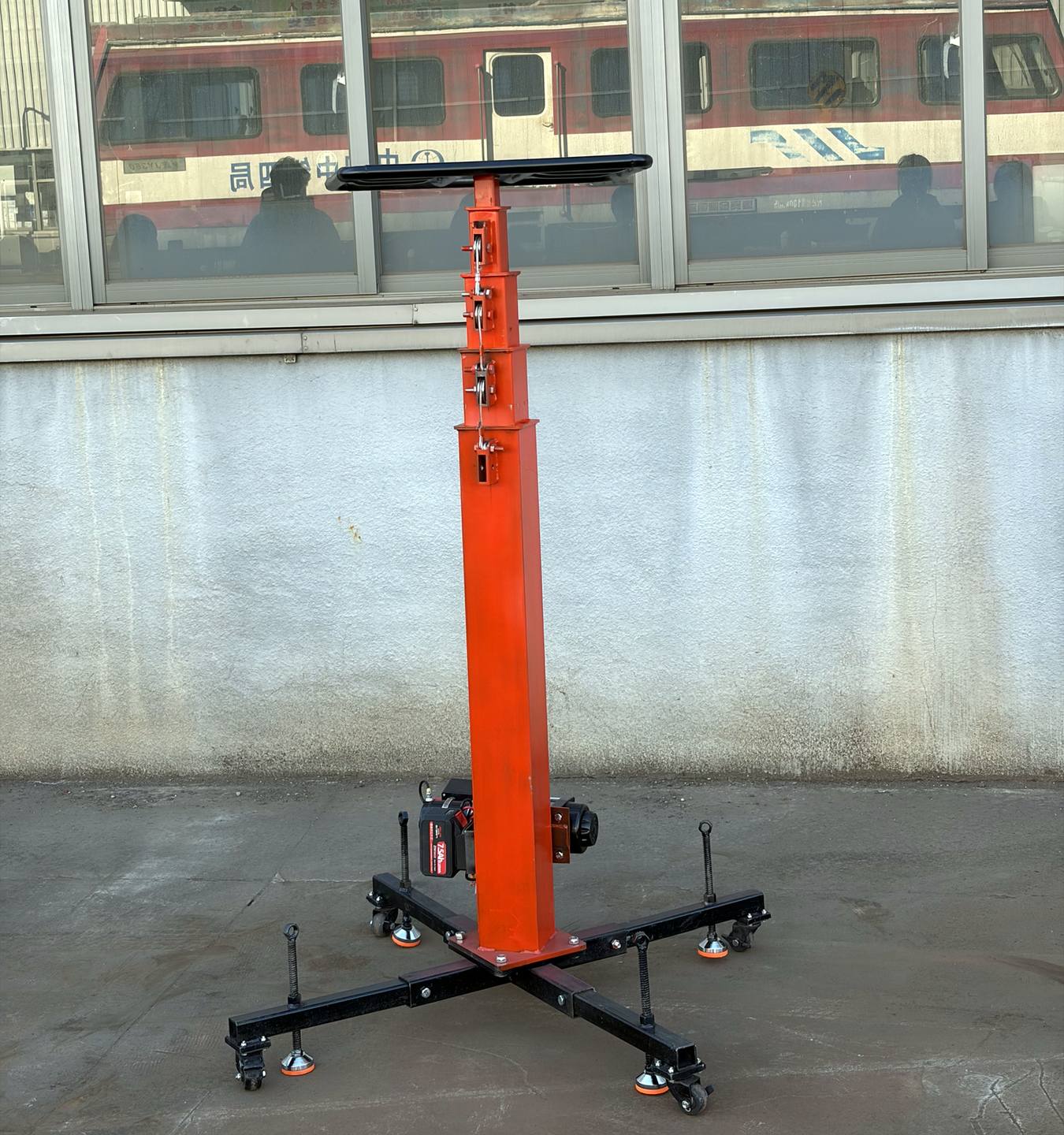
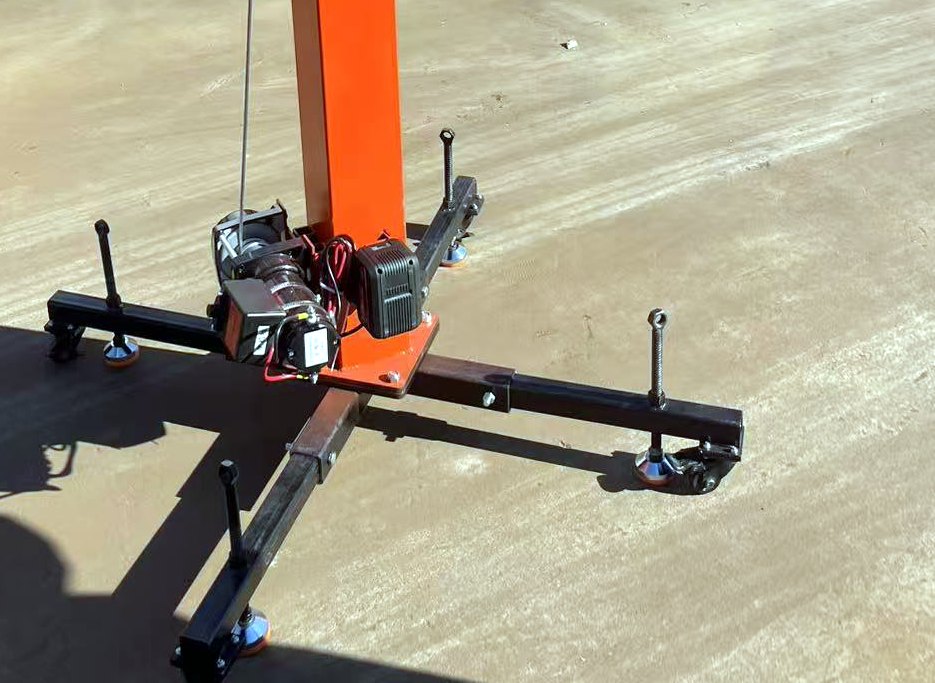
The base and upper mast separate, so the lift travels in a smaller space. On site, the base goes from 50 × 50 cm to a wider 90 × 90 cm stance. Compact enough for doorways, it is a material lift that a small crew can move without a crane.
Rising with the load
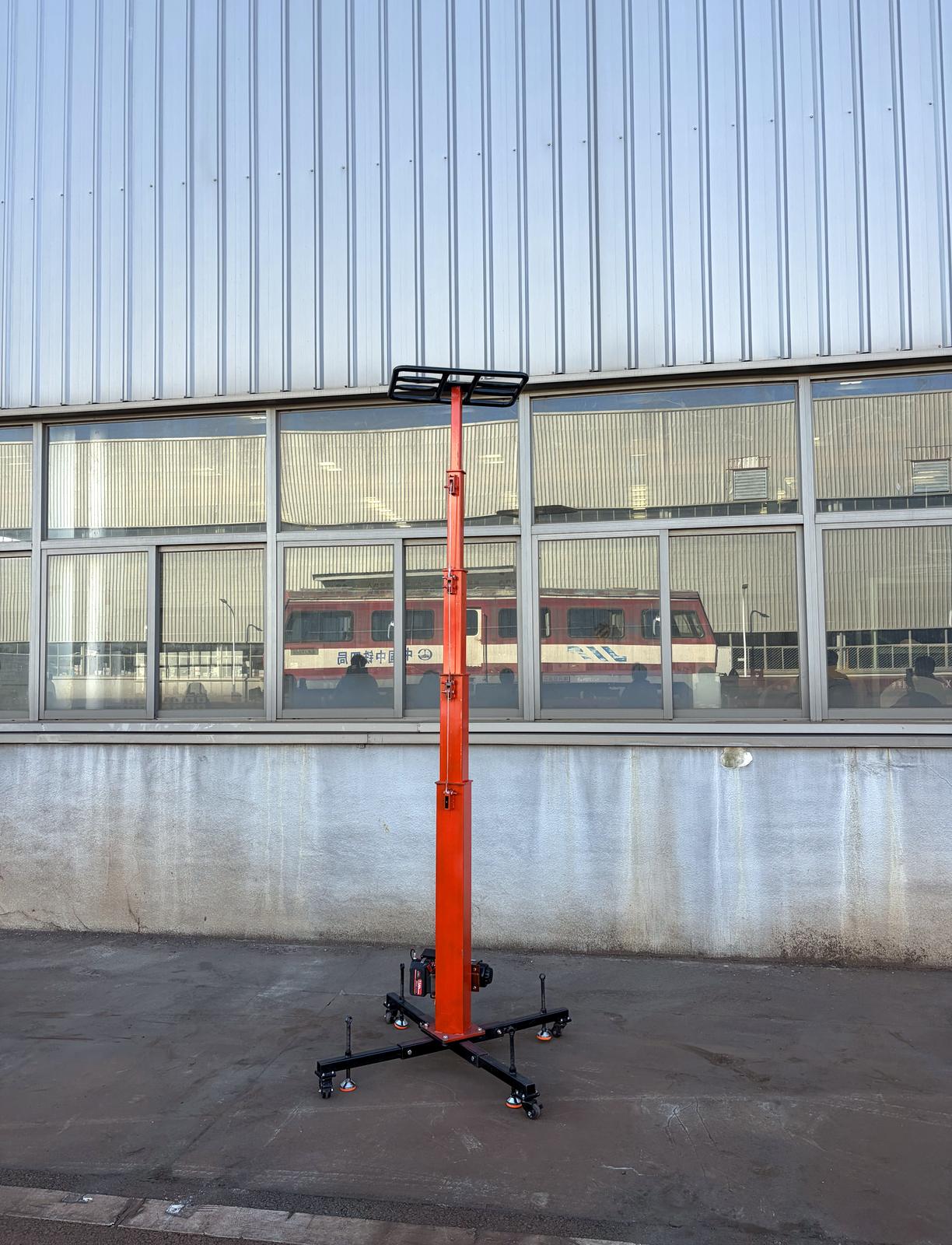
The battery-powered column lift is rated for 300 kg, with a lift height from 1.29 m up to 5 m depending on configuration. The mast sections slide out one after another as the load rises.
At full height
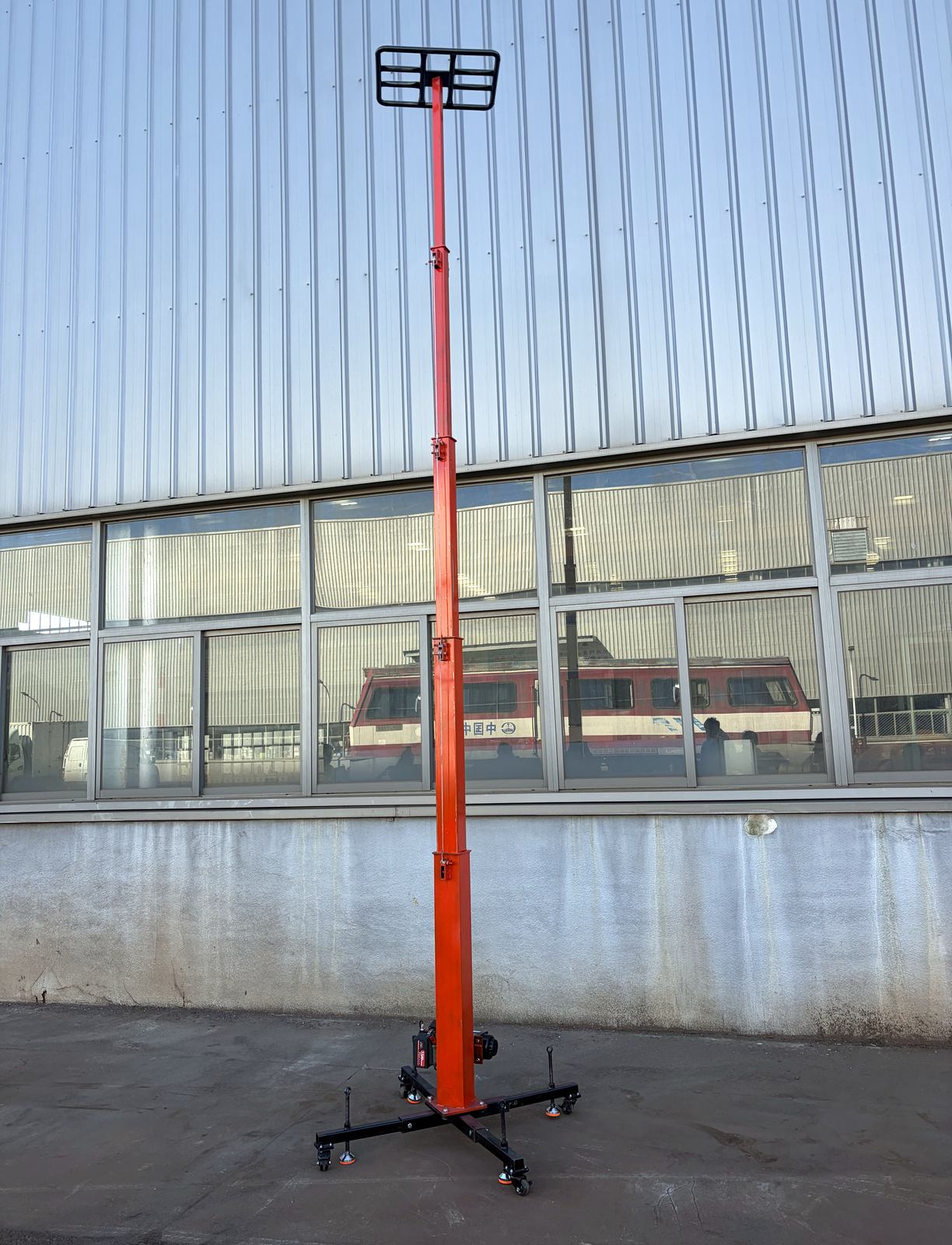
At the top, the load is held steady at the height that was set. The installer's hands are free for alignment and fixing instead of holding weight. Always check the safe load for each configuration against the manufacturer's guidance.
Battery and winch: no socket needed
The lift runs on a nominal 24 V DC supply and is compatible with 18–24 V cordless impact wrench batteries, the same kind of tool batteries many installers already carry. No cable has to run back to a wall socket.
Key Specifications at a Glance
| Item | Specification |
|---|---|
| Load capacity | 300 kg |
| Lift height | 1.29–5 m (depends on configuration) |
| Power supply | Nominal 24 V DC |
| Battery compatibility | Compatible 18–24 V cordless impact wrench batteries |
| Structure | Detachable base and upper mast |
| Base size | 50 × 50 cm, expanding to 90 × 90 cm |
| Net / packed weight | 75 kg / 102 kg |
| Reference case size | 143 × 63 × 81 cm |
Safer, More Efficient Work at Height
A few weeks later Sam was back on a similar site. He unloaded the base and mast, set them up beside the wall, clicked in a battery and expanded the base. The outdoor unit went onto the lift and rose steadily towards the brackets while his helper watched from below.
No one was balancing on a ladder with a heavy unit in their arms.
The job was safer, and it was calmer. With the unit held at the right height, Sam could concentrate on fixing it. When they finished, the lift came apart and went back into the van, ready for the next wall.
The Battery-Powered Column Lift is built around air-conditioning installation and maintenance. If you are considering it for other installation work, share the load, height and site conditions with us first. You can also compare models in our Installation Lifts range.
Air Conditioner Installation Lift FAQ
How high can the Battery-Powered Column Lift raise an AC unit?
The lift height ranges from 1.29 m to 5 m, depending on configuration.
What batteries does it use?
It runs on a nominal 24 V DC supply and is compatible with 18–24 V cordless impact wrench batteries.
How heavy is it, and how is it shipped?
Net weight is 75 kg and packed weight is 102 kg. The base and mast are detachable, which reduces shipping volume. The reference case size is 143 × 63 × 81 cm.
What is the load capacity?
It is rated for 300 kg. Always confirm the safe load for your configuration with the manufacturer's guidance.
Planning Your Next High Mount?
Cities and industrial parks will keep adding buildings, and every one of them needs work done at height. That work should not depend on a ladder and a strong back.
See photos and specifications on the Battery-Powered Column Lift product page, and send us your typical unit weight, mounting height and site photos to request a quote. We will help you check whether this air conditioner installation lift is the right fit for your work.