
 By: ZG-Helplift
Peak season is when a truck loading machine stops being a nice extra. Parcel volumes jump, trucks queue at the dock, and every heavy box still has to go from the floor into a van. This guide looks at what the 2026 peak is doing to loading docks, and how a compact electric loading machine takes the lifting off people.
Peak Season 2026: Trucks Queue, Loaders Work Through the Night
In China, Double 11 kept parcel hubs running around the clock. At one transfer centre in Wuhan, trucks lined up at the dock doors while loading crews worked through the night, with a daily peak of about 2.6 million parcels, according to the local district government.
The same pressure shows up elsewhere. DHL Supply Chain said it would hire 7,000 temporary workers for the holiday peak. A 2026 industry survey reported that the shipping dock has become the most congested part of the warehouse, named by nearly a third of respondents.
The Safety Message: Use Mechanical Aids for Loading
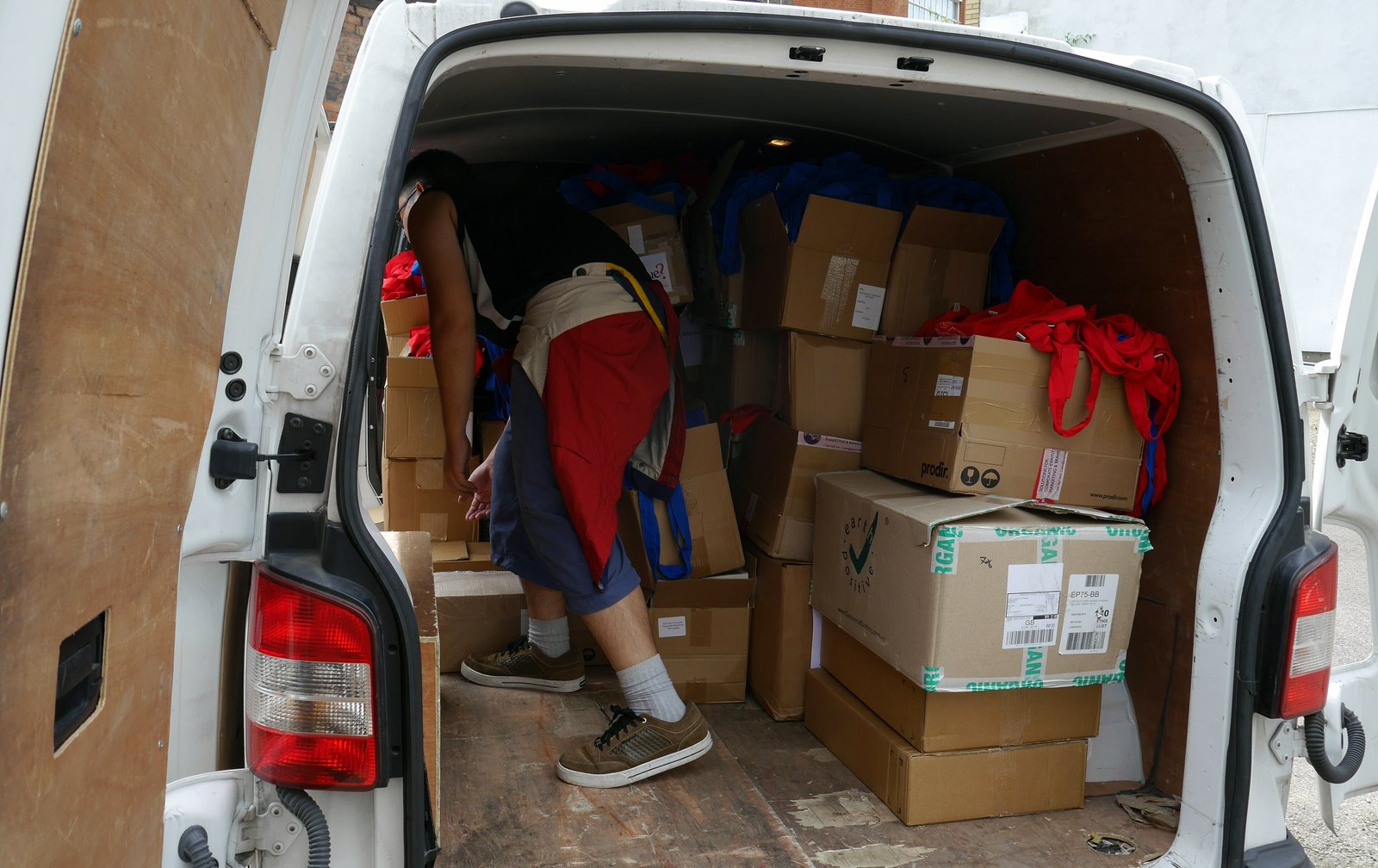
On 11 November, Northern Ireland's Health and Safety Executive (HSENI) urged haulage and logistics employers to protect workers' backs ahead of the Christmas rush. It said manual handling is a particular concern in the sector, and that workers often handle heavy, awkward or unstable loads.
Where possible, use mechanical aids and equipment to move heavy or awkward loads.
HSENI also asked employers to give workers safe access to vehicles and loads, with the right equipment for loading and unloading. In other words, the problem the news describes is not sorting or software. It is the last metre: getting the load off the floor and into the truck.
A Morning at a Parcel Depot
Ana is a fictional shift supervisor at an independent delivery depot, but her morning will sound familiar to many teams. At 5 a.m. she has fourteen vans to load before the drivers leave at seven. Half of her crew are new temps hired for the peak.
Most parcels are easy. The problem is the heavy ones: boxed appliances, cases of drinks, garden furniture, tyres. They are left until last, and then two people lift each one to the van floor. By the second week of peak, one of her regulars has a sore back and the vans are leaving late.
Ana does not need a forklift for this. Her depot has no room for one, and the vans are parked in the yard as well as at the dock. She needs something narrower and simpler: a van loading lift that takes a heavy parcel at floor level and raises it to the load bed.
How a Truck Loading Machine Changes the Last Metre
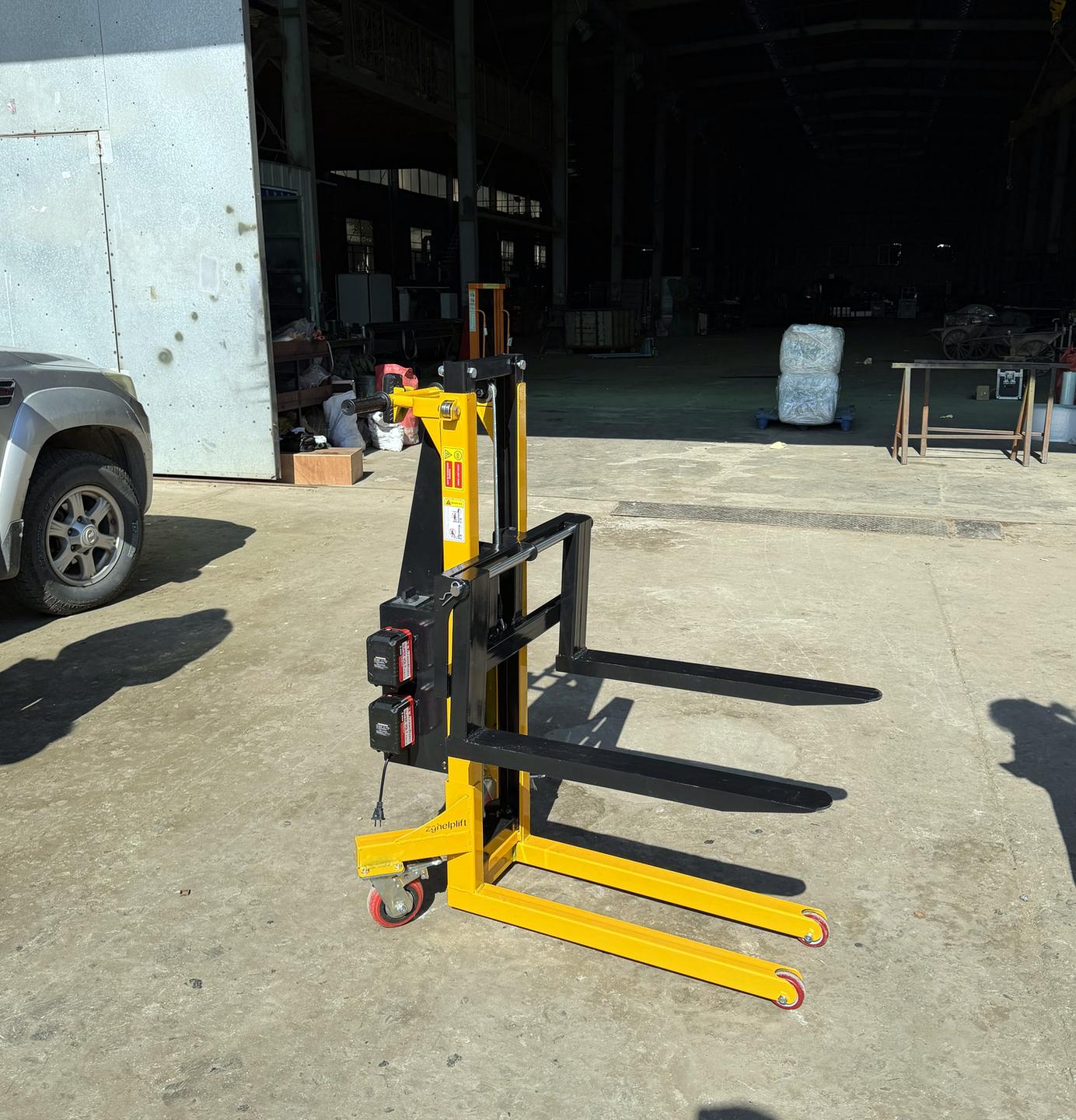
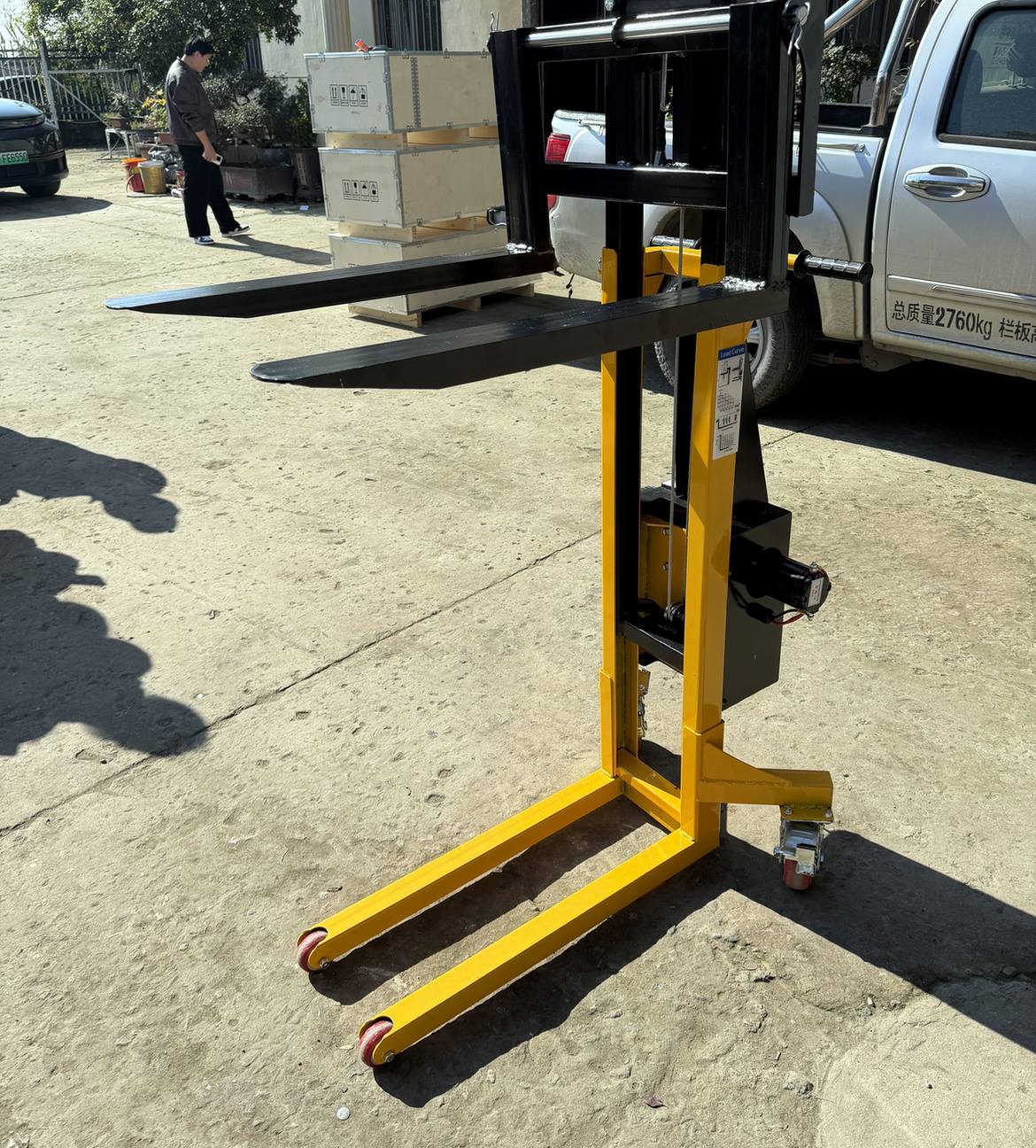
The New Model Loading Machine (ZGXKZCJ160) from ZG-Helplift is built for exactly this step. It lifts 250–300 kg up to 1.6 m, which covers the load bed of many vans and pickups. A heavy box goes onto the forks, the forks rise to the van floor, and the box slides in. Nobody lifts it to chest height.
Power at the Dock and Out in the Yard
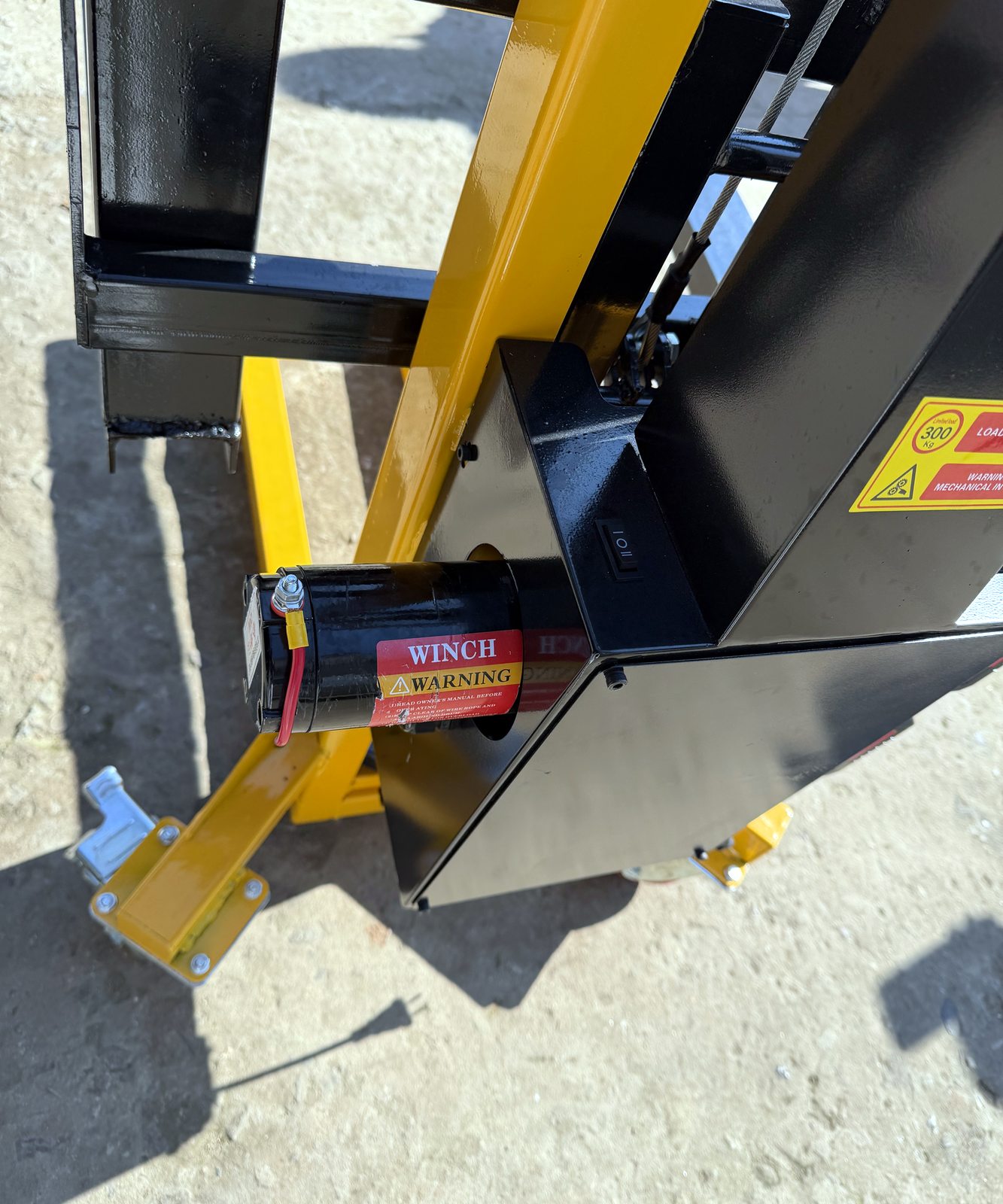
Peak-season loading does not always happen next to a socket. This electric loading machine has selectable power modes. At the dock wall it runs on 220 V or 110 V AC mains, as specified on the nameplate. Out in the yard it switches to a nominal 24 V DC supply from tool batteries on a Makita-style mount, and works as a cordless battery stacker.
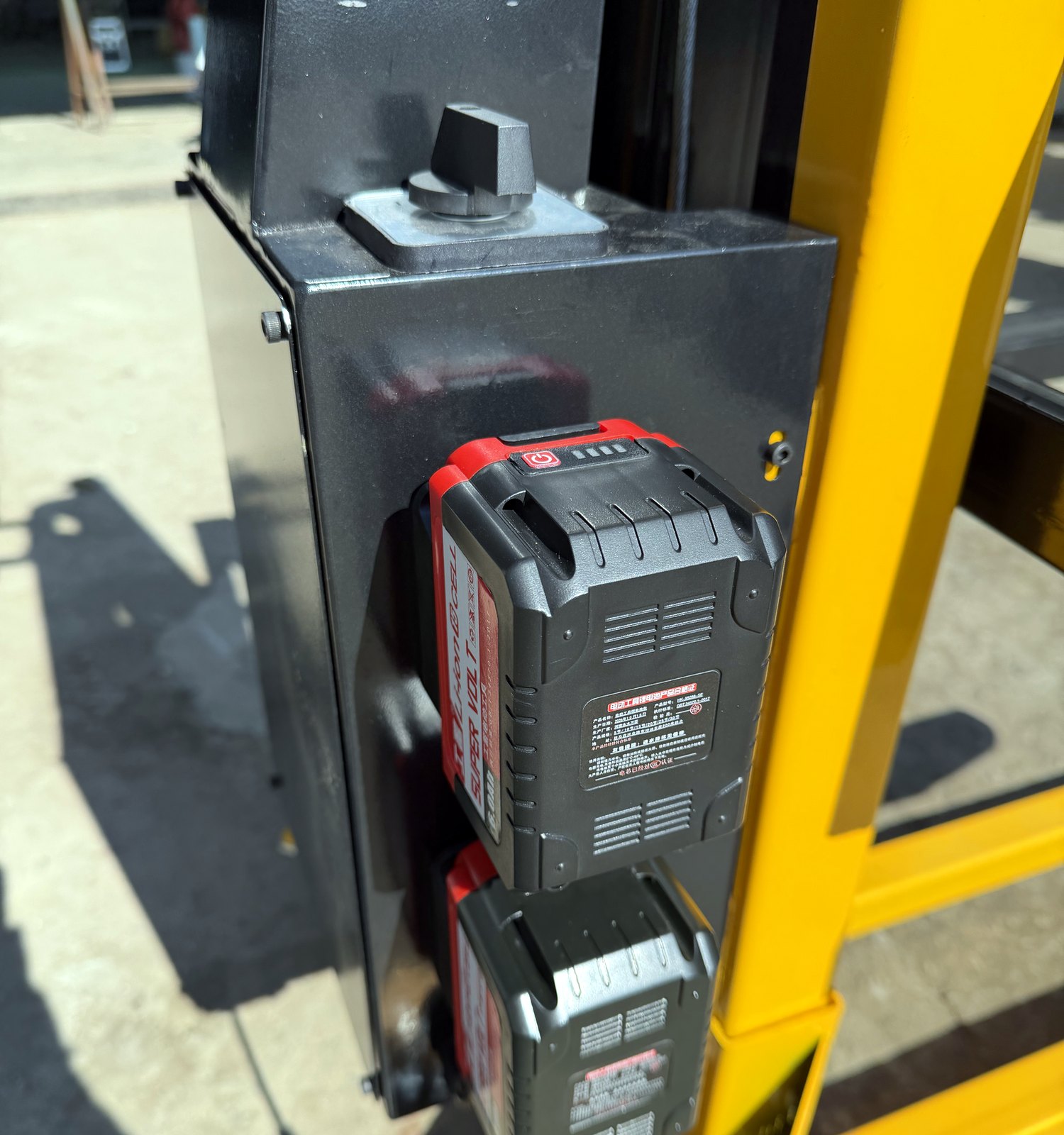
Batteries are not shipped with the machine because of dangerous-goods rules. Buy a compatible battery locally after delivery, and ZG-Helplift can recommend the model. A battery level display and overcharge protection help the crew know where they stand before the last van.
Controls a New Temp Can Learn in Minutes
Peak crews change every week, so simple controls matter. The machine in our photos is operated with a handheld wireless remote with OUT and IN buttons and a power switch, so the operator can stand back and watch the load. Ask us to confirm the control options for your order.
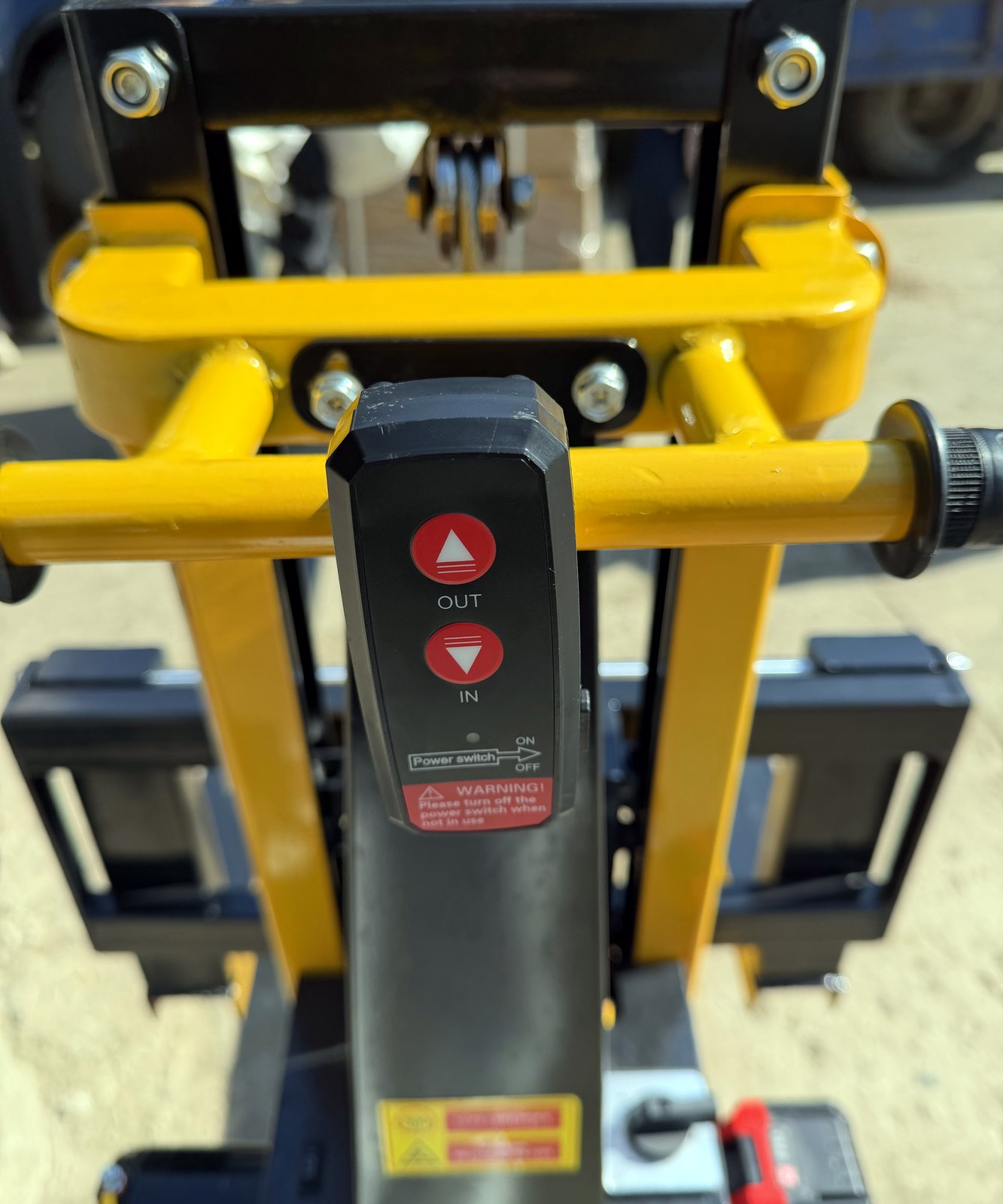
Other details help on a crowded dock. The forks are adjustable, so a narrow carton and a wide appliance box both sit securely. The frame is removable, so the machine packs down to 133 × 68 × 52 cm when the peak is over. A dual wire-rope safety design adds a second line of protection while lifting.
A Peak-Season Loading Checklist
A machine helps most when the routine around it is planned. Before the next rush, it is worth walking the dock with these questions:
- Which items are lifted by hand today? List the heaviest and most awkward parcels and decide which should always go on the forks.
- Where are vehicles loaded? Note which doors have sockets and which vans are loaded out in the yard on battery power.
- Who will operate it? Pick one trained person per shift, and show every new temp the basic controls on their first day.
- Is there space to stage loads? Keep a clear lane between the parcel stacks and the van so the machine is not squeezed between people.
- Are batteries charged? Check the battery level display before the shift, and keep a spare charged battery ready.
None of this is complicated. It turns a good tool into a habit, which is what actually protects backs when the volume is at its worst.
Truck Loading Machine Specifications
| Item | Specification |
|---|---|
| Model | ZGXKZCJ160 |
| Load capacity | 250–300 kg |
| Lift height | 1.6 m (160 cm) |
| AC power | 220 V or 110 V AC, as specified on the nameplate |
| DC power | Nominal 24 V DC, compatible with approved 21 V batteries |
| Battery mount | Makita-style (batteries not included) |
| Net / packed weight | 62 kg / 90 kg |
| Packing dimensions | 133 × 68 × 52 cm |
| Safety | Dual wire-rope design, battery level display, overcharge protection |
| OEM | OEM options available |
Available load capacity varies with supply voltage and battery charge. Always check the machine nameplate and the manufacturer's load guidance.
Is It Right for Your Peak?
- Good fit: heavy parcels, cases and boxed goods loaded into vans, box trucks and pickups at depots, small warehouses, retail back rooms and exhibition venues.
- Check first: the load bed height of your vehicles against the 1.6 m lift, and the weight of your heaviest item against the 250–300 kg range.
- Not a replacement for: a forklift moving full pallets, or a dock leveller at a high-volume hub.
If your crew loads flight cases for events, our earlier story shows the same machine on a touring night: why a flight case lift matters at a midnight loading dock.
This guide is about outbound van and truck loading in peak season. For inbound container unloading in a small warehouse, see Container Unloading Lift for Small Warehouses Facing the 2026 Surge.
Truck Loading Machine FAQ
How much can this truck loading machine lift?
Its load capacity range is 250–300 kg, with a lift height of 1.6 m. Actual capacity varies with supply voltage and battery charge, so check the nameplate.
Can it load vans in a yard with no power socket?
Yes. It can run on a nominal 24 V DC battery supply through a Makita-style mount, as well as on 220 V or 110 V AC mains.
Are batteries included?
No. Dangerous-goods shipping rules apply, so buy a compatible battery locally after delivery. ZG-Helplift can recommend the model.
Is it a replacement for a forklift?
No. It is a compact loading machine for lifting individual heavy items to vehicle height. Full pallets and high-volume docks still need forklifts or dock equipment.
Can I get it with my company branding?
Yes, OEM options are available. Share your requirements when you request a quote.
Plan for next peak now. Every heavy parcel still has to reach the van floor. Let a machine do the lifting.
See the New Model Loading Machine, or contact ZG-Helplift for a quote, OEM options and the recommended battery model.
Cover image: ZG-Helplift original photo of the ZGXKZCJ160 truck loading machine.