 By: ZG-Helplift
If you import lifting and material-handling equipment for resale, the supplier you choose ends up carrying your name. This guide shows how to verify a supplier in China before you pay a deposit: how to tell a real factory from a trading company, what to check in the business licence, how to run a video audit that cannot be staged, and which red flags should end the conversation.
We write it as a supplier ourselves. ZG-Helplift is based in Fuyang, Anhui, and works as a combined manufacturer and trader. So we will also tell you which of these checks you should run on us.
Why Verification Matters More for Lifting Equipment
A wrong T-shirt supplier costs you a season. A wrong lifting equipment supplier can cost you a customer, a warranty bill that runs for years, or an accident report. Three things make this category different:
- The product carries loads. Wall thickness, weld quality, wire rope and motor rating decide whether a 300 kg rating is real.
- You need the same machine again. Distributors reorder the same model for years. A supplier who quietly changes the motor or the steel between batches breaks your spare-parts stock and your reputation.
- Compliance is your problem. In many markets the importer who places a machine on the market shares responsibility for its conformity. A weak certificate is your risk, not the supplier's.
Factory, Trading Company or Both?
A trading company is not automatically bad, and a factory is not automatically good. What matters is that the supplier tells you the truth about what they are, because that decides who controls quality and who you complain to.
| Type | Strengths | Watch for | Ask |
|---|---|---|---|
| Factory | Controls welding, assembly and testing. Can change the design for OEM orders. | Narrow range. Slower replies. English may be limited. | “Show me the production line for this exact model.” |
| Trading company | Wide range, one invoice, better communication and export paperwork. | No direct control of production. May switch factories between orders. | “Which factory builds this, and will it be the same factory next time?” |
| Combined manufacturer and trader | Builds its core models and sources related items, so you can fill a container from one supplier. | The line between made and sourced can blur. | “Which models do you build, and which do you source?” |
ZG-Helplift is in the third group. Our range covers truck loading machines, column lifts, stainless steel lift tables, aluminium ladder lifts for solar panels, truck-mounted forklifts and electric platform trolleys. Asking us which models we build and which we source is a fair question, and you should ask every supplier the same thing.
Step 1: Check the Business Licence and the Unified Social Credit Code
Every company registered in mainland China has an 18-character Unified Social Credit Code (统一社会信用代码). It is printed on the business licence. Ask for a clear photo of the licence, then look the code up yourself on the National Enterprise Credit Information Publicity System (gsxt.gov.cn). Commercial databases such as Qichacha and Tianyancha show the same data in an easier format. If you cannot read Chinese, a browser translator is enough for this step.
What to compare
- Chinese company name. This is the legal name. English names vary between platforms, so the Chinese name is what must match the contract, the invoice and the bank account.
- Business scope (经营范围). A manufacturer's scope includes manufacturing items such as 通用设备制造 (general equipment manufacturing). A pure trader usually lists only sales (销售) and import and export.
- Date of establishment. Compare it with the “years of experience” in the sales pitch. If they differ, ask why. The team may be older than the current company, but you want that explained, not discovered.
- Registered capital and status. Check that the status is active (存续) and that the company is not on the list of abnormal operations.
- Registered address and production address. Many companies register at an office and build somewhere else. That is normal, but you should know both addresses and visit, or video-audit, the production one.
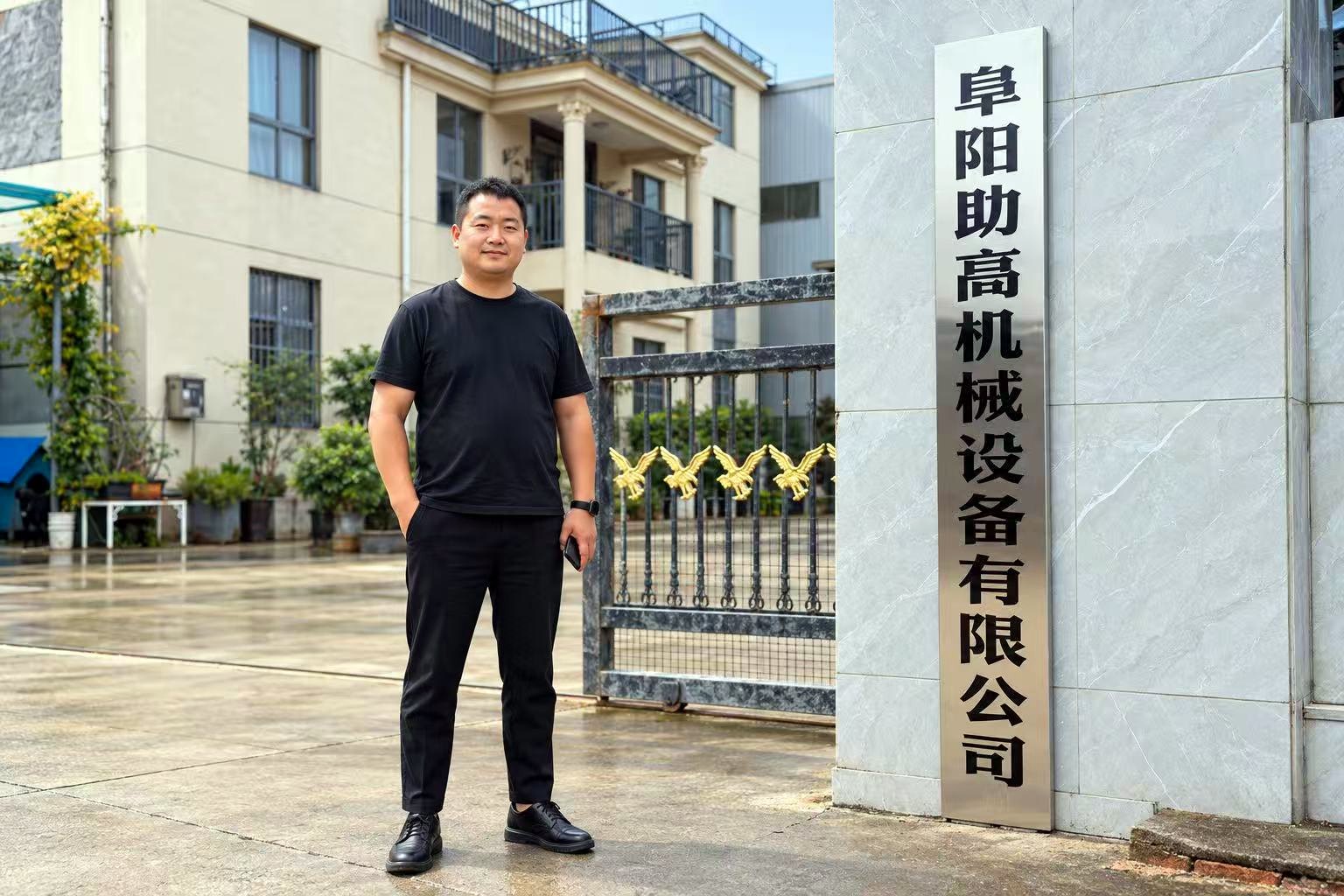
As an example, our own licence lists general equipment manufacturing, electromechanical equipment manufacturing, machinery sales and import and export in its scope. Our registered office is in Fuyang city, and our production address is in Yuanzhai Town, Yingdong District, Fuyang. Run the same check on us before you order.
Pay only to a company bank account whose name matches the licence. A sudden “new bank account” email is the most common fraud in China sourcing.
Step 2: Run a Video Factory Audit That Cannot Be Staged
A video call costs nothing and filters out most fake factories. The trick is to ask for things a showroom cannot fake. Ask for one continuous shot, without cuts, and lead the camera yourself:
- Start at the gate sign with the company name, then walk to the workshop without stopping the camera.
- Show today's date: a phone screen or a sheet of paper with your company name and the date.
- Raw material stock: steel tube, profiles, sheet. A factory always has some.
- Cutting, welding and painting stations, with work in progress for the model you are quoting.
- The assembly area and a unit running under load.
- The packing area: crates, foam, fixing, labels.
- Finished goods with nameplates you can read on camera.
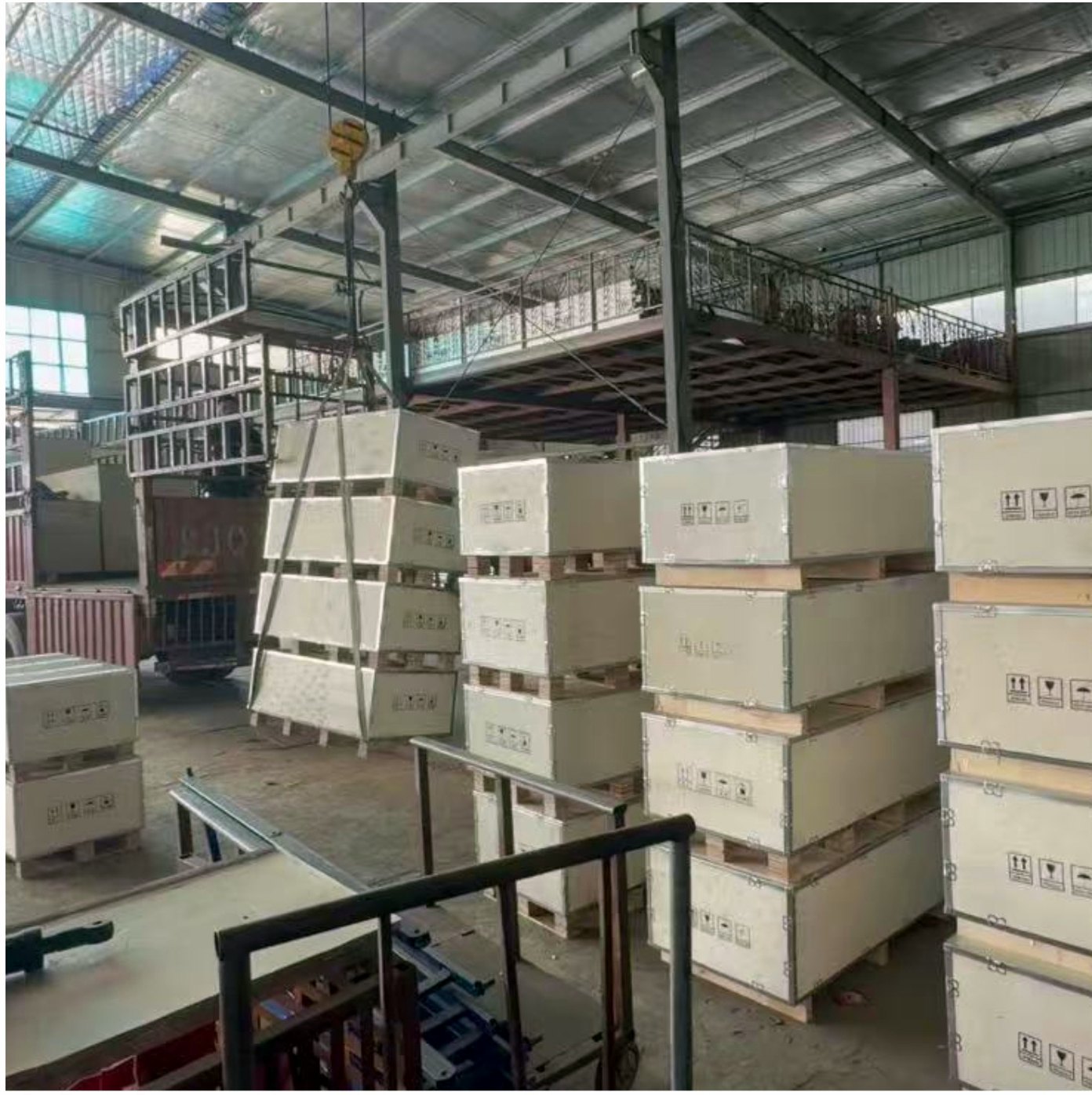
Watch for small signs: the same three machines in every photo, a clean floor with no tools, staff who do not know where things are, or a request to “send the video later”. Any of these is a reason to ask for a second call.
Step 3: Ask for Evidence That They Build This Product
A factory that builds lifting equipment can show you the details behind the photos. Ask for:
- A bill of materials for your model: steel grade and wall thickness of the mast, motor power and brand, wire rope diameter, battery type and capacity.
- Close-up photos of welds, the lifting carriage, the base and the nameplate of a unit made this month.
- Test records: what load and overload test they run before packing, and a filled-in record for a recent batch.
- A drawing or exploded view with part numbers. You will need it for spare parts later.
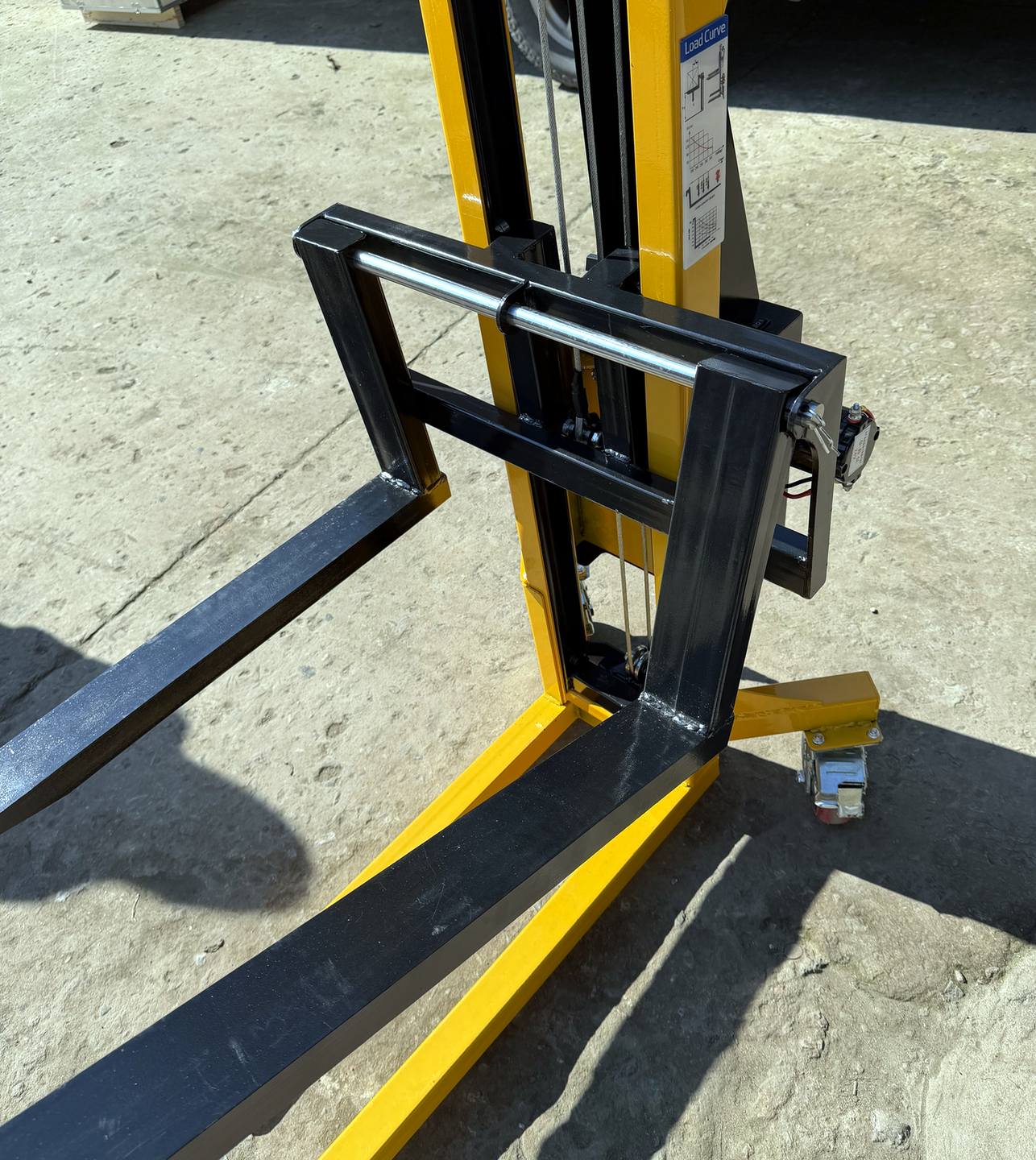
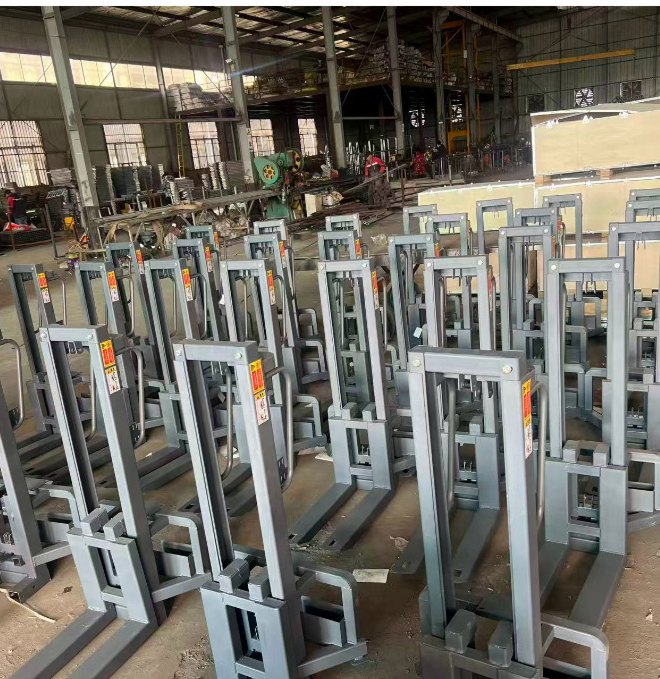
A real producer answers these questions in days, not weeks. A trader can answer them too, if the factory behind them is cooperative, and that cooperation is worth knowing about before you order.
Step 4: Read Certificates, Do Not Just Collect Them
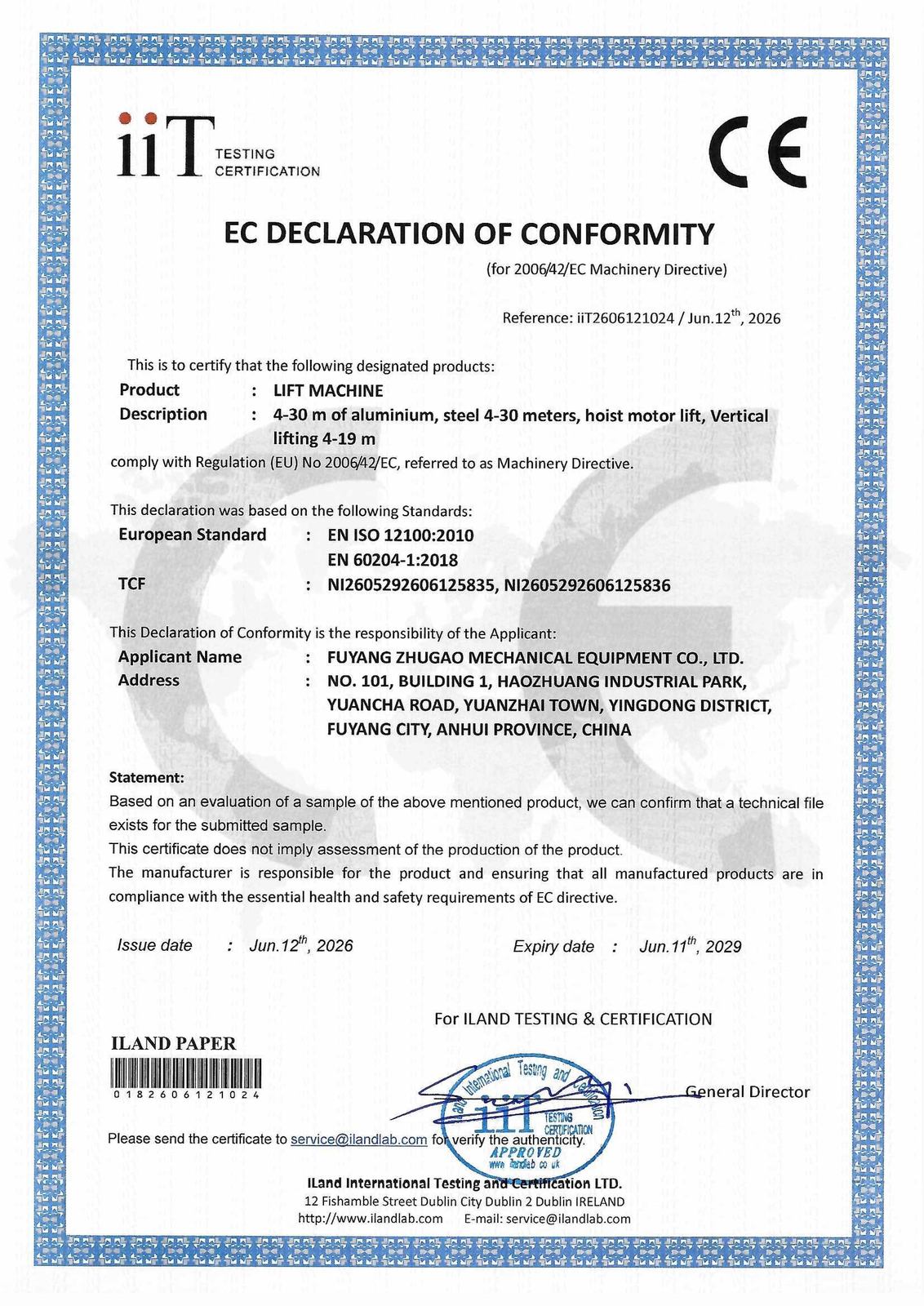
Almost every supplier will send a CE document. The question is what it actually says.
CE for machinery
For most machinery, CE marking is based on the manufacturer's own declaration of conformity, backed by a technical file. A “CE certificate” from a testing company is usually a voluntary attestation that a sample and a technical file were reviewed. That has value, but it is not an EU approval. Check that:
- the applicant name and address match the business licence;
- the product description covers the model and lift height you are buying;
- the standards listed fit the product, for example EN ISO 12100 for risk assessment and EN 60204-1 for electrical equipment, plus a product standard where one exists, such as EN 1570-1 for lifting tables;
- the document can be verified with the issuer, and any notified body number appears in the EU NANDO database.
Also plan ahead: the EU Machinery Regulation (EU) 2023/1230 applies from 20 January 2027 and replaces the Machinery Directive 2006/42/EC. Ask your supplier how they will update their declarations.
ISO 9001, patents and test reports
Check that the holder name on an ISO 9001 certificate is the company you are paying, and verify it through the certification body or IAF CertSearch. For patents, check the patent holder's name in the CNIPA database. A certificate issued to another company, or one that expired years ago, is a red flag even if it looks impressive.
Step 5: Export Records, References and Sample Policy
- Export records. Ask for a recent bill of lading or export declaration with the buyer's name masked. Lifting machinery usually ships under HS heading 8428, so the goods description should match.
- References. Ask for one buyer in your region who agrees to a short call. Good suppliers ask their customers first, so give them a few days.
- Sample policy. A supplier who refuses any sample, or only offers a showroom unit, is hard to hold to a standard later. We cover samples, inspection and payment in detail in our guide to importing machinery from China.
Red Flags That Should Stop the Deal
| Red flag | Why it matters |
|---|---|
| Bank account in a different name, or a personal account | No legal link between your money and the company you checked. |
| Licence scope with no manufacturing, but “our own factory” in every message | The supplier is not telling the truth about what they are. |
| Certificates in another company's name | Borrowed paperwork protects nobody when a machine fails. |
| Price far below every other quote for the same specification | The saving usually comes from steel thickness, motor power or missing safety parts. |
| No video call, or only pre-recorded videos | You cannot confirm the production site exists. |
| Pressure to pay today for a “special price” | Real factories quote with a validity date, not a countdown. |
China Factory Audit Checklist
Copy this list into your supplier file. A supplier who passes every line is worth a sample order.
| Check | Where | Pass if |
|---|---|---|
| Unified Social Credit Code | gsxt.gov.cn, Qichacha, Tianyancha | Active status, no abnormal-operation listing |
| Chinese legal name | Licence, contract, invoice, bank account | Identical everywhere |
| Business scope | Licence | Matches what the supplier claims to be |
| Production address | Video audit or visit | Continuous walk from gate to workshop |
| Work in progress | Video audit | Your model, or its frame, is on the line |
| Bill of materials | Steel, motor, rope and battery specified | |
| Test record | Load test filled in for a recent batch | |
| CE documents | Issuer, NANDO | Correct name, model and standards |
| Export evidence | Masked B/L or declaration | Matches the product category |
| Sample terms | Quotation | Production-line sample, written price and lead time |
FAQ: Verifying a Supplier in China
Is it a problem if my supplier is a trading company?
Not by itself. Many trading companies offer good service and export paperwork. The problem is a trader who claims to be a factory, because then you do not know who controls quality. Ask directly, and check the business scope on the licence.
How do I check a Chinese company's Unified Social Credit Code?
Ask for a photo of the business licence, then search the 18-character code on the National Enterprise Credit Information Publicity System at gsxt.gov.cn, or on Qichacha or Tianyancha. Compare the Chinese name, scope, status and address with what the supplier told you.
Is a CE certificate from a Chinese testing lab valid?
It can be useful evidence, but for most machinery CE is based on the manufacturer's own declaration of conformity and technical file. Check that the document names the right company and model, lists suitable standards and can be verified with the issuer.
Do I need to visit the factory in person?
For a first order, a well-run video audit plus a sample is often enough. For large or long-term OEM orders, an on-site visit or a third-party audit is worth the cost.
What is the single biggest red flag?
A request to pay into a bank account whose name does not match the company on the business licence. Stop and verify by phone before sending any money.
Run this checklist on us. Ask ZG-Helplift for our business licence, a live video walk through the workshop, and the documents for the model you are quoting. Then compare us with anyone else on your list.
Email Factory@helplift.cn, message us on WhatsApp at +86 18055890315, or send the inquiry form on any product page.
All photos: ZG-Helplift's own photos of our company, workshop and documents.